
Common Signs a Slot Is Too Complex for Beginners
There is a difference between a slot that is exciting and a slot that is ready for you right now. Some games are genuinely well-designed and rewarding, but they ask for a level of prior knowledge that a new player has not had the chance to build yet. Recognising those games before you open them is one of the most practical skills a beginner can develop.
This is not about avoiding advanced slots forever. It is about knowing when a slot is likely to feel confusing rather than engaging, and choosing to come back to it later once your reading habits are stronger. Understanding a slot before you spin starts with exactly this kind of honest assessment.
Sign 1: The opening screen has too many competing elements
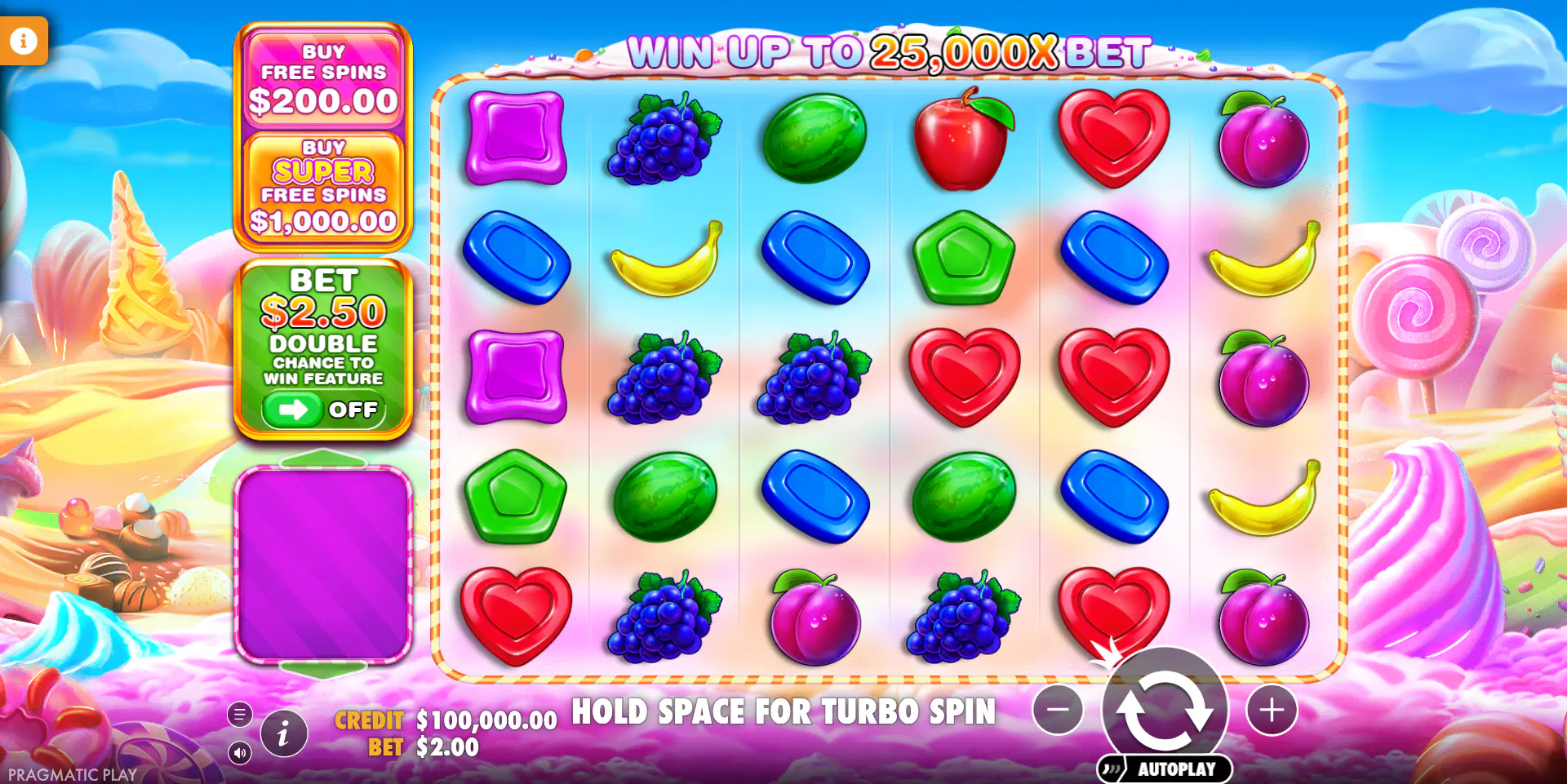
The first and fastest sign is what the game shows you before you have pressed spin once. A slot that opens with multiple purchase panels, toggle options, a win-ceiling announcement and interactive bonus-buy buttons is immediately telling you that it was not designed as an entry-level experience.
Sweet Bonanza 1000 presents this pattern clearly. The opening screen shows two Buy Bonus options with different price points, a “Double Chance to Win Feature” toggle, and a “WIN UP TO 25,000X BET” banner above the grid — all before the first spin. Each element represents a separate layer of the game’s design, and understanding all of them together requires context that a first-time player usually does not yet have.
A clean opening screen with a grid, a spin button and a single bet control is a much better starting point. That kind of simplicity is one of the core qualities behind what makes a slot easy to read, and its absence on the opening screen is one of the clearest early warnings that a game is built for more experienced players.
Sign 2: The win system is not visible from the main screen
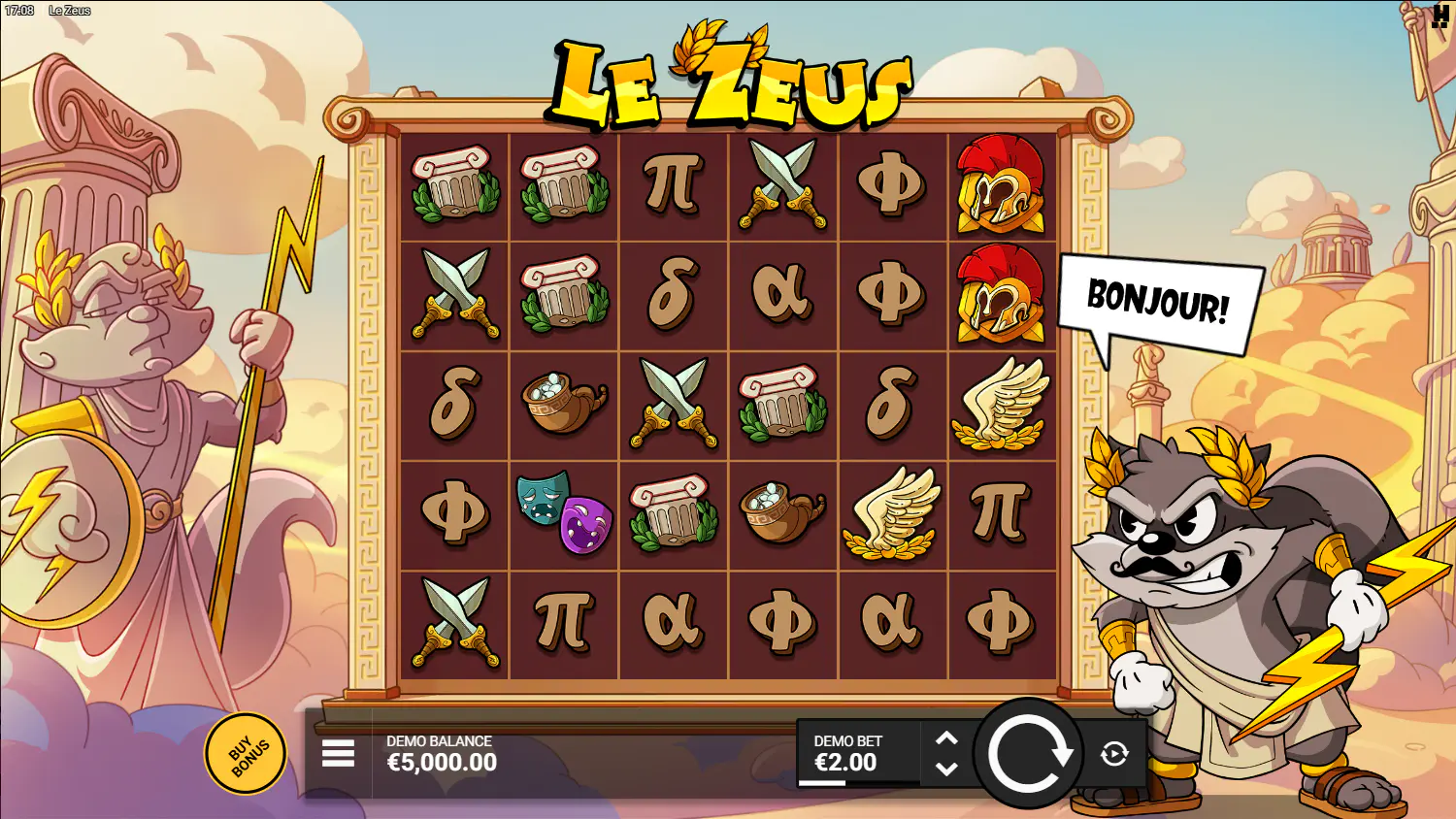
A slot is too complex for a beginner when the player cannot tell how wins are formed from the main game screen alone. If there are no payline indicators, no visual directional cues and no obvious symbol-grouping logic visible before the first spin, the win system requires prior knowledge to understand.
Le Zeus is a strong example of this. The 6×6 grid shows Greek letter symbols across its positions, but there are no edge indicators, no payline numbering and no directional cues. The win system relies on a combination of matching logic and a coin-collect mechanic that requires separate tracking. A new player opening this slot without prior knowledge of how to recognise a count-based slot or collect mechanics will struggle to understand why wins happen or what the game is building toward.
Compare that to a payline slot where numbered line markers on the screen edges immediately tell the player: wins follow these paths, from left to right. That visual structure means the game communicates its own logic before the first result settles, which is what separates a beginner-appropriate slot from one that demands more background knowledge.
Sign 3: The bonus round introduces an entirely new interface
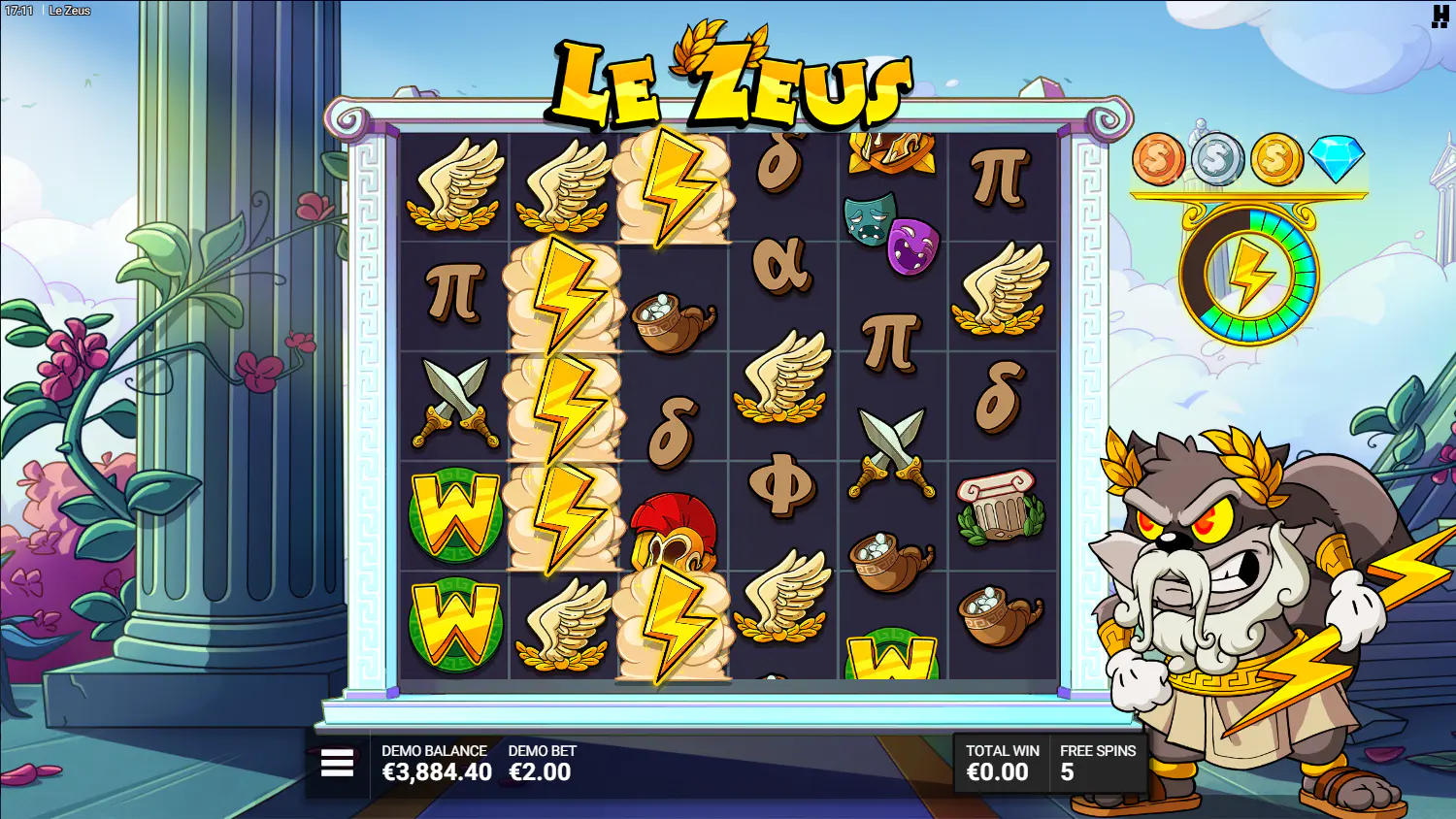
One of the strongest signs that a slot is too complex for early sessions is when the bonus round replaces or significantly transforms the main game screen. If the bonus adds a new tracker, a tiered meter, a separate symbol type that only exists during the feature, or a completely different visual environment, the player is essentially learning a second game within the first one.
In Le Zeus, triggering the coin-collect bonus adds a four-tier tracker — bronze, silver, gold, diamond — in the upper right corner of the screen, along with a circular lightning meter that fills progressively. Coin symbols reveal values that feed the tracker, the tier reached determines the reward, and wild symbols activate across the grid at the same time. None of this existed on the opening screen.
When the lightning reel mechanic fires, an entire column fills with lightning bolt symbols, the tracker continues accumulating, and the round counter advances in the corner. A player following this for the first time is managing the grid, the tracker tiers, the lightning column, the wilds and the round count simultaneously. That is a lot of parallel reading for someone who is still learning how slot features work at a basic level.
A beginner-friendly bonus round uses the same visual framework as the base game and adds one clear mechanic on top. When the bonus requires its own orientation period before it makes sense, the slot is past the beginner threshold.
Sign 4: Multiple mechanics are active at the same time
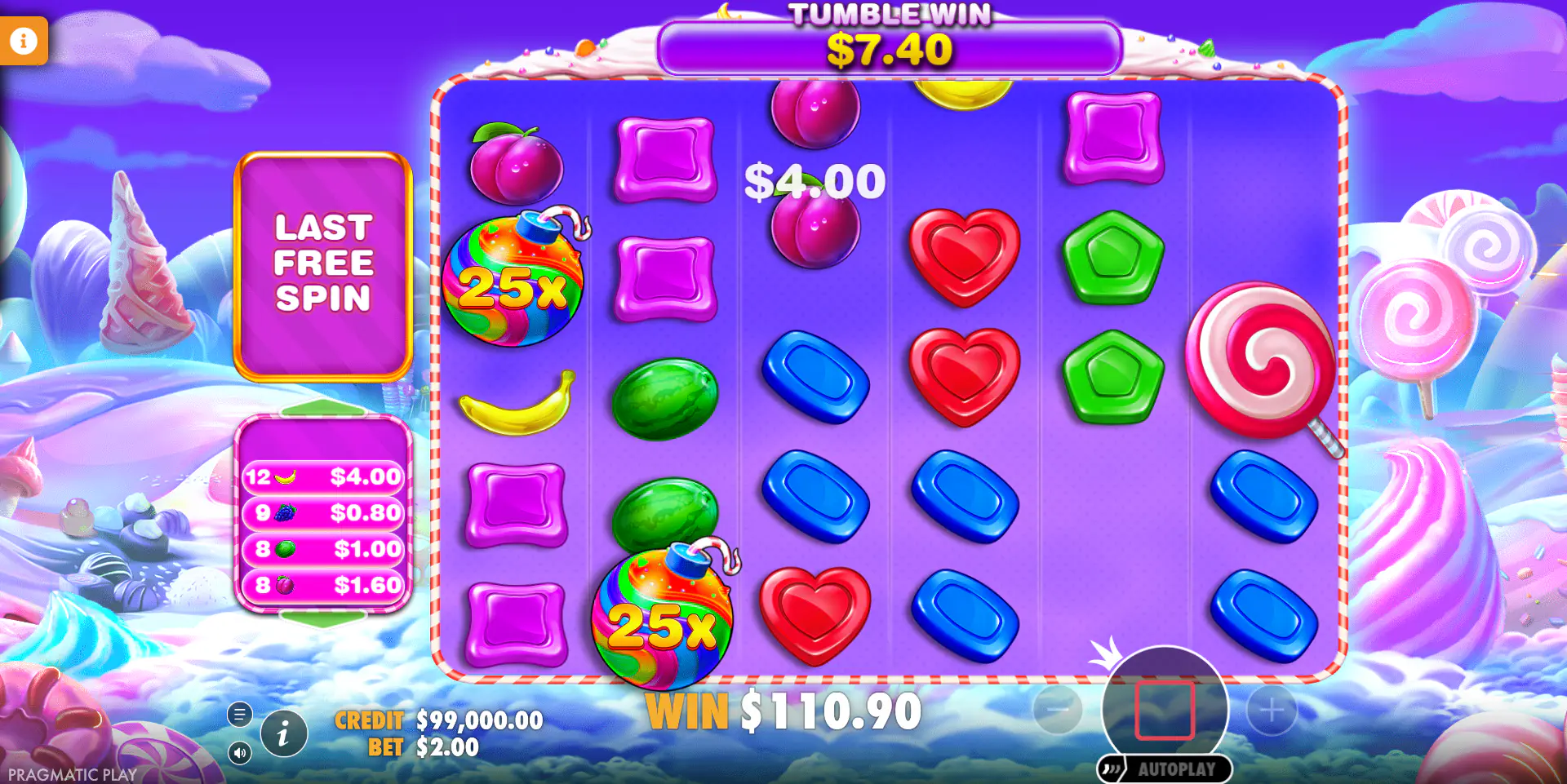
A closely related sign is when several mechanics run in parallel within a single spin or tumble sequence, each one affecting the result in a different way.
During a free spins sequence in Sweet Bonanza 1000, the following can be active simultaneously: a tumble removing winning symbols, two multiplier bomb symbols holding 25x values each, a running tumble win counter accumulating at the top of the screen, individual win labels floating above each matched symbol group, and a “LAST FREE SPIN” indicator appearing in the side panel. Each element affects the final result, and understanding the total payout requires following all of them together.
That level of simultaneous activity is manageable for a player who already understands what tumbles do, how multiplier bombs work, and how accumulated multipliers are combined at the end of a sequence. For a player who is still building that foundation, the simultaneous mechanics make it very hard to understand why a particular result happened — which is the opposite of what a learning session should feel like.
Sign 5: The paytable runs longer than three pages
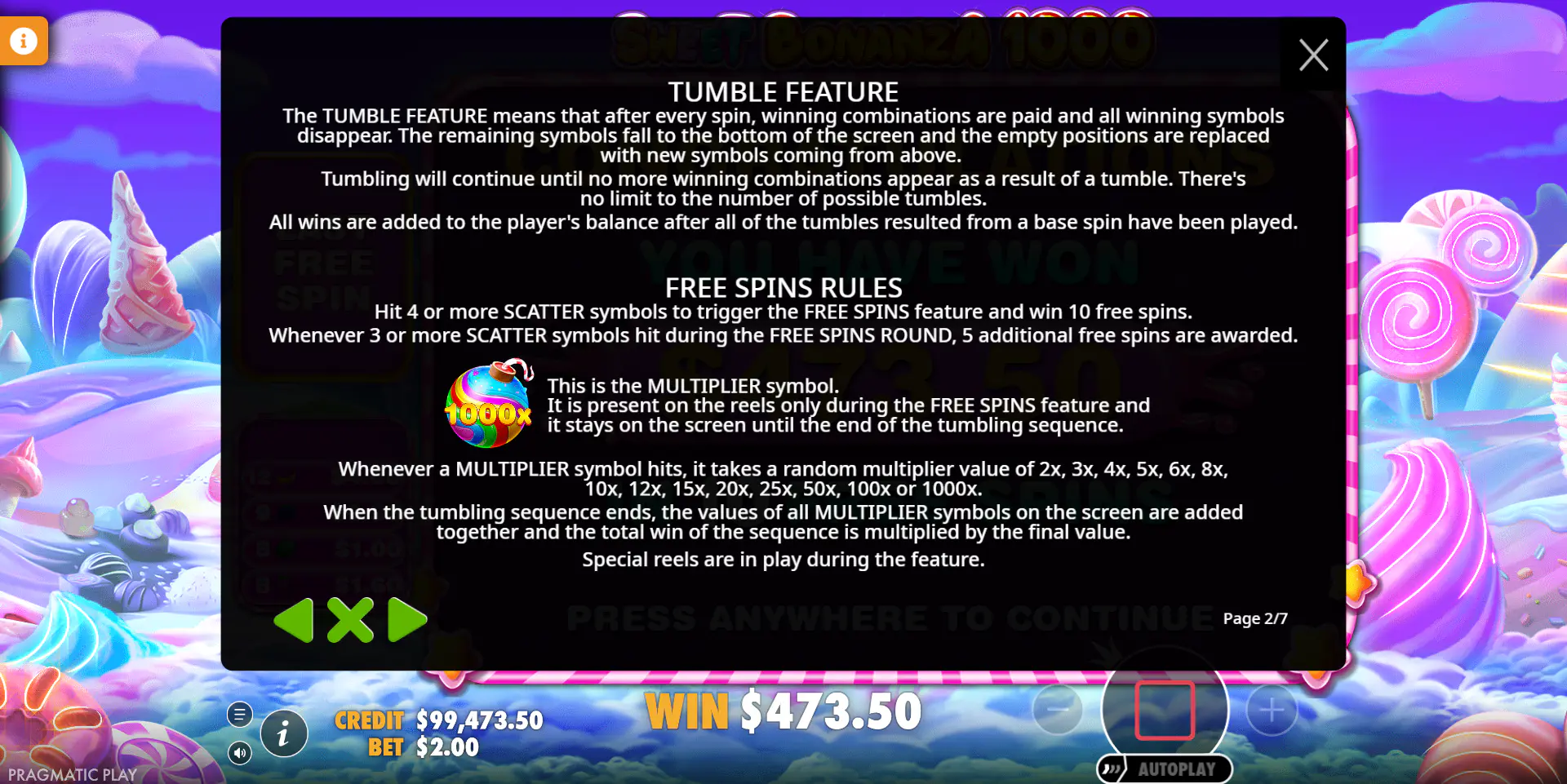
The number of paytable pages is one of the most reliable complexity indicators available before a session starts. A slot that can explain itself in two or three screens has a focused feature set. A slot that needs five, six or seven pages to describe all of its mechanics has a layered design that rewards prior knowledge of each component.
Sweet Bonanza 1000 uses seven paytable pages. Page 2 of 7 alone covers the Tumble Feature, the Free Spins Rules, and the Multiplier symbol — a separate symbol type with twelve possible random values that combines additively with other multiplier symbols at the end of each tumble sequence. That is three distinct mechanics described on one page, with six more pages still to follow.
Checking the page count before you play takes five seconds and tells you a great deal about what the session will require from you. If a slot needs more than three pages to explain its rules, it is worth asking whether you already understand the individual components well enough to follow all of them during live play. If you are not yet sure, how to read a slot paytable gives you a clear method for working through any rules panel before you start.
Sign 6: The game assumes prior knowledge
Some slots are built for players who already know what certain mechanics do. They use the paytable to describe how their version of a mechanic works, rather than explaining what the mechanic is in the first place. That is a subtle but important sign that the game is not targeting a first-time player.
A slot that says “Wild symbols substitute for all other symbols except Scatters” is explaining a basic mechanic and is accessible to beginners. A slot that says “Multiplier bomb symbols take a random value from 2x, 3x, 4x, 5x, 6x, 8x, 10x, 12x, 15x, 20x, 25x, 50x, 100x or 1000x, and when the tumbling sequence ends all multiplier symbol values present on the screen are added together and the total win of the sequence is multiplied by the final value” is describing an advanced implementation of multiplier logic that assumes the player already understands what a multiplier is, what a tumble sequence does, and how combined multipliers work.
Neither approach is wrong. But a beginner reading the second description without prior context will struggle to picture what that means during live play, which is exactly when the game will be producing results in real time.
What to do when you recognise these signs
Recognising that a slot is too complex for your current stage does not mean the session is wasted. It means you have successfully read the game before spending time on it — which is the whole point.
The practical response is straightforward. If a slot shows three or more of these signs, add it to a mental list of games to return to later and choose something with a cleaner profile for now. How to choose your first demo slot gives you a clear beginner progression with specific examples, and it explains exactly which games work as starting points and which ones belong further along the path.
If a slot shows one or two signs but still looks manageable, it may be worth opening the paytable first and reading it fully before you spin. That habit, described in how to read a slot paytable, is the single most effective way to reduce confusion during a session with a more complex game.
And if you want to compare a complex slot directly against a simpler one before deciding, how to compare two slots in 60 seconds gives you a structured four-question method that makes the difference in complexity visible and concrete. The goal is always the same: to understand a slot before it runs, rather than decoding it mid-session when the pressure of following a live result is already there.