
How to Read a Slot Paytable
If you are new to demo slots, the paytable is the first thing you should open before you spin.. It explains how the game pays, which symbols matter most, what the special symbols do, and how the bonus round works.
Many beginners skip the paytable because they think the reels will explain everything on their own. In reality, the paytable is the fastest way to understand whether a slot is simple, feature-heavy, or built around rules that are easy to miss during normal play..
This guide uses real examples from Respinix to show how paytables work in practice. We will look at Book of Dead, Gates of Olympus, and The Dog House, because together they show three very different ways a slot can explain its rules.
What a slot paytable tells you
A slot paytable is the game’s rulebook in a simplified form. It usually tells you four things: how symbols pay, how wins are formed, what special symbols do, and what changes during bonus features.
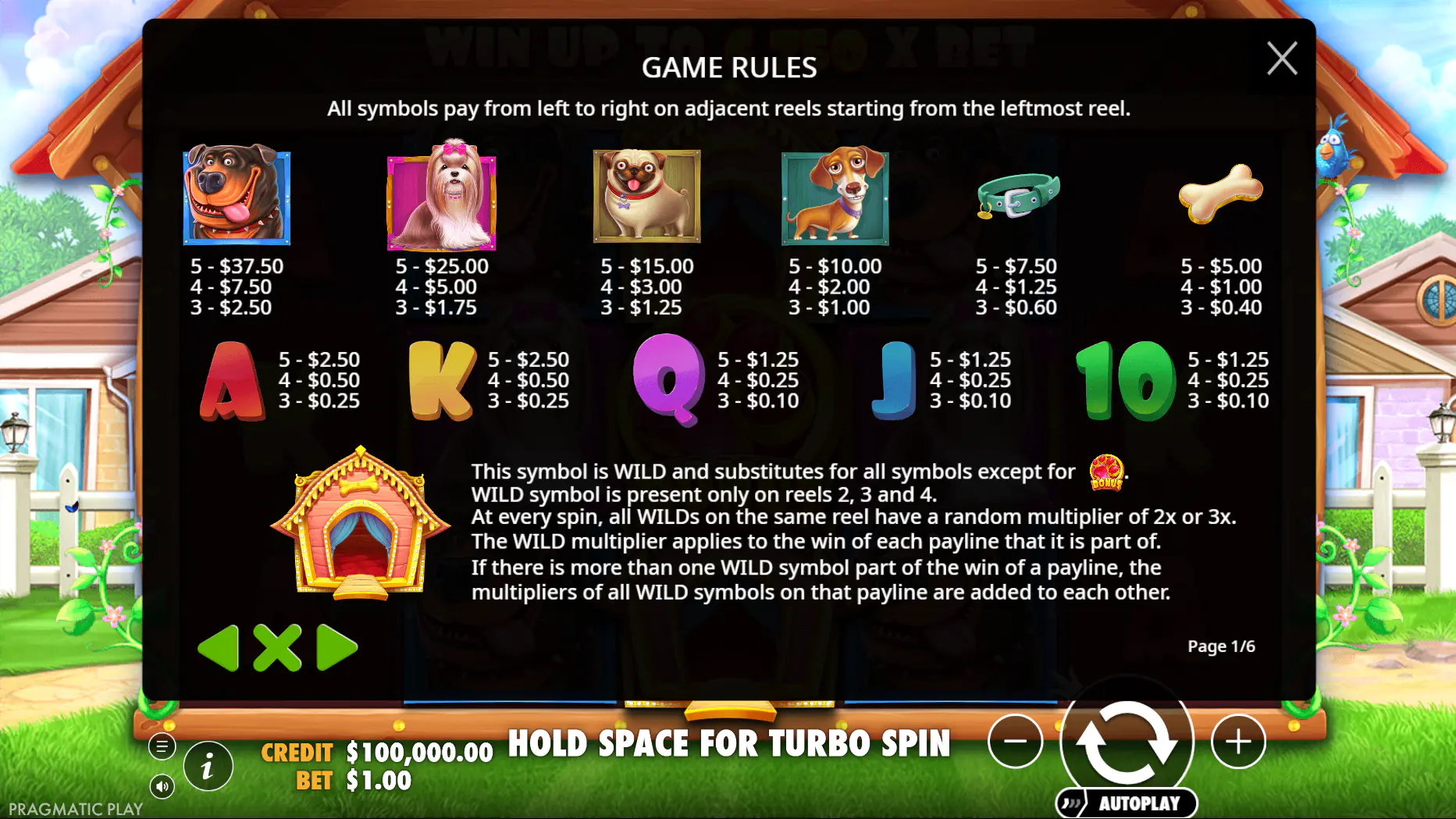
The first thing to check is the game’s win system.. In Book of Dead, the paytable says that all wins pay left to right except scatters, which pay anywhere, and that only the highest win is paid per selected line. In The Dog House, the rules say that all symbols pay from left to right on adjacent reels starting from the leftmost reel. In Gates of Olympus, the paytable says symbols pay anywhere on the screen and that the total number of matching symbols determines the win value.
That difference matters immediately. Some slots ask you to follow paylines, while others ask you to count matching symbols anywhere on the grid..
Step 1: Read the symbol values
The easiest place to start is the symbol section. This part of the paytable shows which icons are premium symbols and which are lower-value symbols.
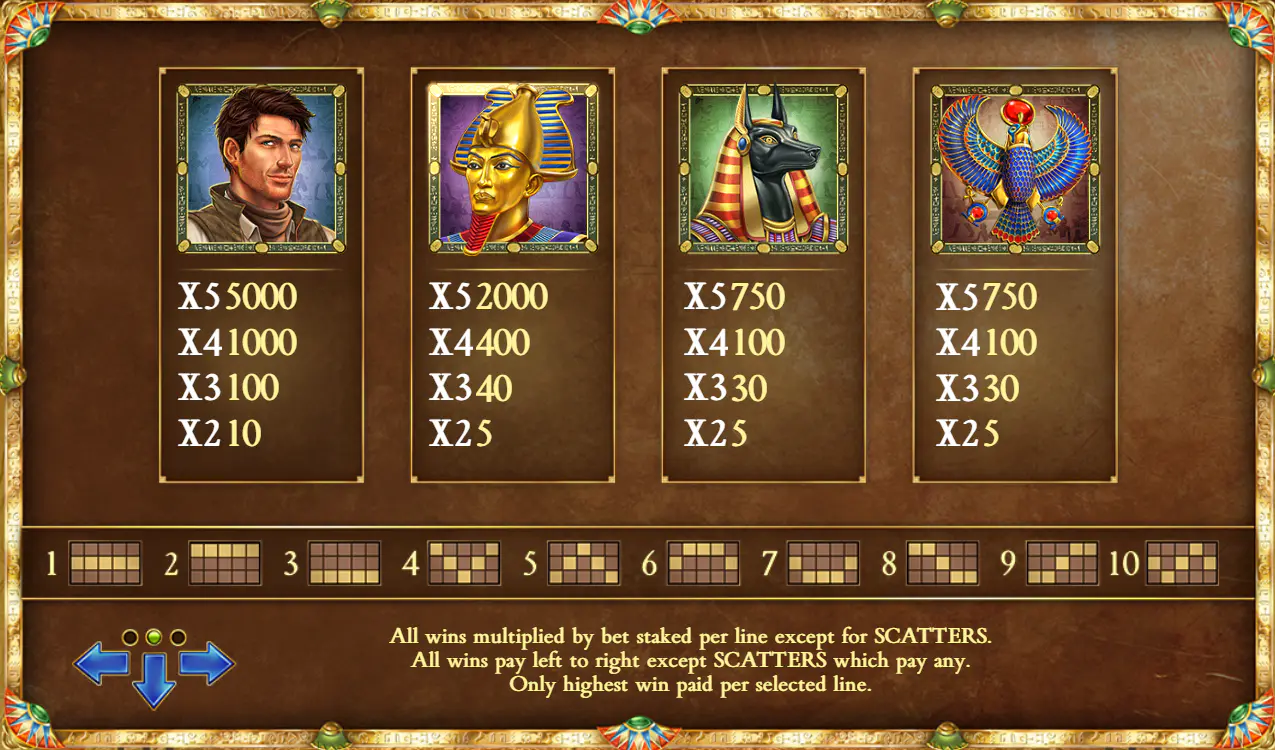
Book of Dead is ideal for learning this because its paytable splits the symbols across separate pages. On the premium-symbol page, the Explorer pays x5 5000, the Pharaoh pays x5 2000, and both Anubis and the bird symbol pay x5 750. On the lower-symbol page, A and K pay x5 150, while Q, J, and 10 pay x5 100.
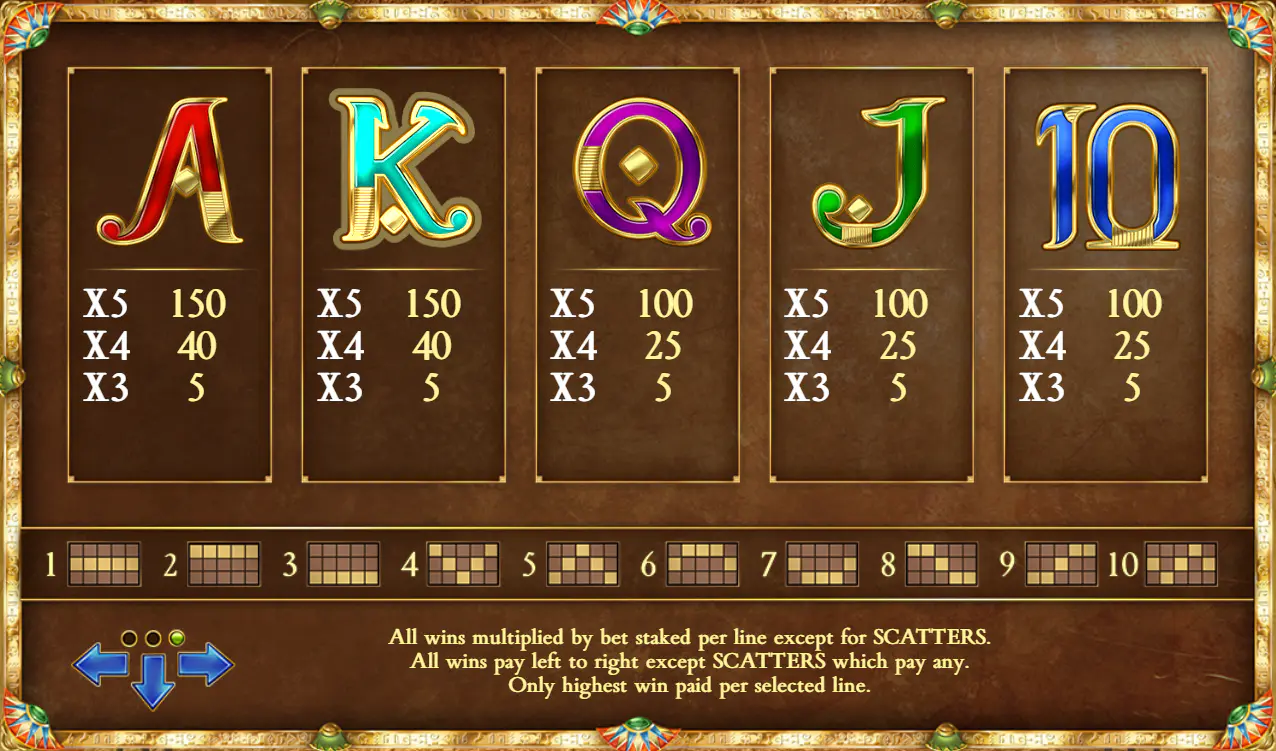
That gives beginners a very clear lesson: not all visible wins are equally valuable. A busy screen can still contain mostly low-value combinations, and the paytable helps you see that before you play.
The Dog House teaches the same principle on a single page. Its top dog symbol pays $37.50 for 5, $7.50 for 4, and $2.50 for 3 on the displayed bet, while the lower-value Q, J, and 10 each pay only $1.25 for 5, $0.25 for 4, and $0.10 for 3. That is a very easy way to spot the difference between premium and low symbols at a glance.
Step 2: Understand how wins are formed
Once you know the symbols, the next question is: how does the slot actually create a win?
In Book of Dead, wins are tied to paylines, so the reader needs to understand line patterns and left-to-right combinations. The paytable pages also show the 10 paylines visually, which helps beginners understand that the game is not paying for symbols anywhere on the screen.
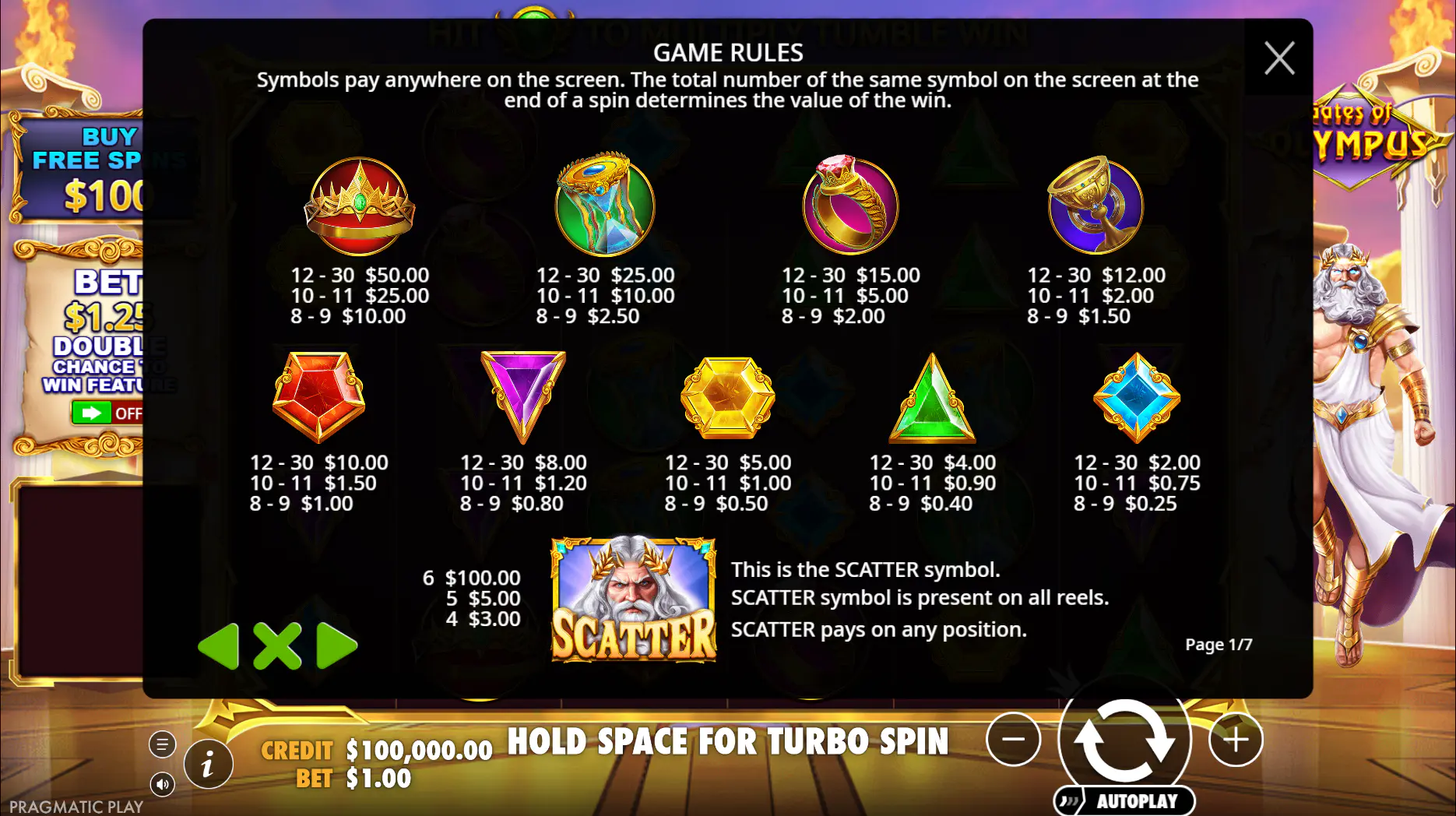
In Gates of Olympus, the paytable teaches the exact opposite idea. The rules state that symbols pay anywhere on the screen, and the win value depends on how many matching symbols appear by the end of the spin. The same page shows that premium symbols pay at 8 to 9, 10 to 11, and 12 to 30 matching symbols, which is very different from a classic five-reel payline slot.
This is one of the most important lessons for beginners. Before you judge whether a slot is simple or confusing, you need to know whether it is line-based or count-based..
Step 3: Find the wild and scatter symbols
After the main payouts, always move to the special symbols. These are usually the symbols that change the entire game.
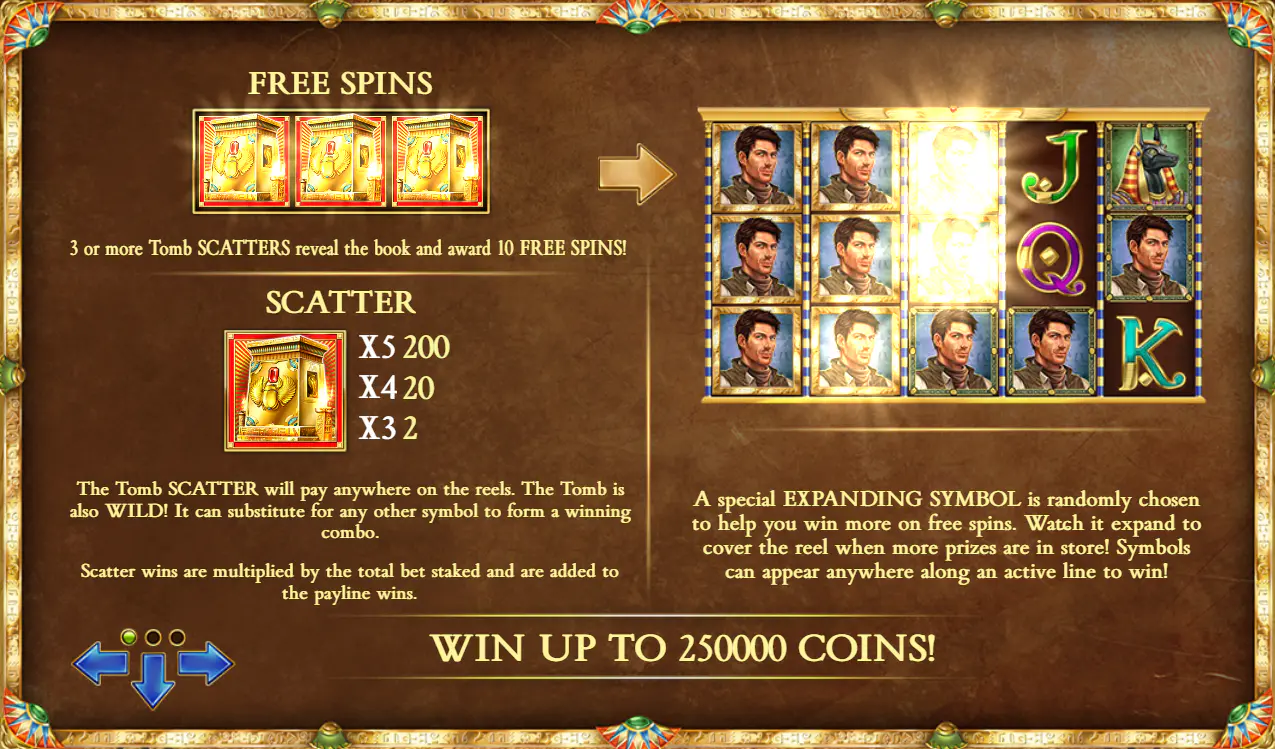
In Book of Dead, the Tomb symbol is especially important because the paytable says it pays anywhere on the reels and also acts as a Wild that can substitute for other symbols to form a winning combo. That means one symbol plays two roles, and that is exactly the kind of detail beginners often miss when they skip the paytable.
In Gates of Olympus, the Scatter block is also clearly separated. The page says the Scatter symbol is present on all reels, pays on any position, and has its own payout ladder, including $3 for 4 scatters, $5 for 5 scatters, and $100 for 6 scatters on the displayed stake. This is a strong example of how scatters can work independently from the main payout system.
In The Dog House, the most important special symbol is the Wild. The paytable says the Wild appears only on reels 2, 3, and 4, and that on every spin all Wilds on the same reel have a random multiplier of 2x or 3x. It also says that if more than one Wild is part of the same payline win, their multipliers are added together.
That is a very useful beginner lesson. A Wild is not always just a substitute symbol. In some games, the paytable turns the Wild into the main source of value.
Step 4: Read the feature section carefully
A lot of beginners stop reading the paytable too early. They check the symbol values, then close the window, and miss the part that explains what makes the game special.
Book of Dead shows why that is a mistake. Its feature page says that 3 or more Tomb Scatters award 10 free spins, and it also explains that during free spins a special expanding symbol is randomly chosen. That feature is the game’s defining mechanic, and without the paytable many players would not fully understand why the bonus round matters so much.
Even on a single-page paytable, the feature rules can be the most important part. In The Dog House, the Wild multiplier rules matter more than the ordinary symbol values because they explain how the most exciting wins are created. In Gates of Olympus, the pay-anywhere structure and scatter independence are what define the whole game, so the rules panel matters just as much as the payout amounts.
A good habit is simple: do not stop at “what pays.” Keep reading until you understand “what changes.”
Real examples from Respinix
If you want to learn how to read slot paytables quickly, these three Respinix examples cover almost everything a beginner needs.
- Book of Dead is the best example of a traditional payline slot. Its three pages show premium symbols, lower-value symbols, line structure, scatter behavior, Wild substitution, 10 free spins, and the expanding-symbol mechanic.
- Gates of Olympus is the best example of a modern non-payline paytable. Its rules page shows pay-anywhere logic, threshold-based symbol counts, and a scatter system that pays on any position.
- The Dog House is the best bridge example between a traditional slot and a feature-led slot. It uses classic left-to-right wins, but the Wild on reels 2 to 4 carries random 2x or 3x multipliers that can be added together on the same payline.
Together, these examples show why the paytable matters so much. It is not just a list of numbers. It is the clearest explanation of how the slot wants to be read.
How to read a paytable in 30 seconds
If you want a fast method, use this order every time.
If you follow those four steps, you will understand most demo-slot paytables much faster and choose games more confidently.
Common beginner mistakes
The best way to read a slot paytable is to treat it as a quick map of the whole game. It tells you how wins are formed, which symbols matter most, and whether the bonus round changes the rules in an important way.
For beginners, Book of Dead is the best place to learn classic payline logic, Gates of Olympus is the clearest example of pay-anywhere structure, and The Dog House is a strong example of how one Wild mechanic can shape the value of a whole slot.
Once you get used to reading those three paytables, almost every other demo slot becomes easier to understand.
FAQ
The most important part is the win system. In Book of Dead, wins follow paylines, while in Gates of Olympus wins depend on the total number of matching symbols anywhere on the screen.
They depend on the game. In Book of Dead, the Tomb symbol pays anywhere and also acts as a Wild, while in The Dog House the Wild appears on reels 2 to 4 and carries a random 2x or 3x multiplier.
Because the paytable shows whether the slot is line-based, symbol-count based, or feature-led. That helps you understand the game faster and avoid choosing a slot that is more complex than it first looks.
Book of Dead, Gates of Olympus, and The Dog House are excellent examples because they represent three different paytable styles: classic paylines, pay-anywhere logic, and multiplier-based Wild rules