
Teen Patti by Rival is a refined solo take on the classic Indian card game, played with two 52-card decks. Set against a clean green felt interface, the game challenges players to outrank the casino using a 3-card hand. Featuring a high 97.23% RTP and medium-high volatility, the action centers on the choice between See and Blind bets. With payouts reaching 45:1 for a Trio and a unique dealer qualification rule, it offers a fast-paced, strategic experience for serious table game fans.




The game strips away the social bluffing of traditional Teen Patti and replaces it with a cold, mechanical decision-making process. You start by laying down an Ante, but the real game begins after the two 52-card decks are shuffled. Rival uses 104 cards here, which subtly shifts the math compared to the single-deck variants found in most back-alley games or rival providers.
Before you even glance at your hand, you face the first psychological hurdle: to See or to go Blind. Choosing Blind adds a bet equal to your Ante. It is a pure gamble on the unknown, but it is the only way to unlock the premium paytable. If you play Blind, a Pair pays 1:1 instead of just being a push. This is where the house tempts you to increase your exposure before the cards are even flipped.
Once you decide to See your cards, the stakes double again. To stay in the hand, you must place a Play bet, which is exactly twice the amount of your initial Ante. If your balance is bleeding and you are looking at a High Card hand, the Fold button becomes your only friend, though it means forfeiting everything already on the table. The friction here is intense because the jump from a $1 Ante to a total $4 investment (Ante + Blind + Play) happens in seconds.
The Anatomy of the Paytable Traps
Is the Blind Bet a Strategic Necessity or a Bankroll Drain?
The math suggests that the Blind bet is where the volatility lives. If you hit a Trio (three of a kind) while playing Blind, you are looking at a massive 45:1 return. Compare that to the 25:1 payout for the same hand on a standard Bet. Rival has structured this to punish “safe” play. For instance, a Sequence (straight) pays 5:1 on a normal bet but jumps to 7:1 if you had the stones to stay Blind. The 97.23% RTP is heavily weighted toward these top-tier hands, meaning long stretches of dead spins or pushes are the norm for anyone not hitting Pure Sequences regularly.
How Does the “No Game” Rule Impact Your Payouts?
This is the sneakiest part of the Rival engine. The dealer must hold at least a Queen High to qualify. If the dealer fails this check, they declared “No Game.” On the surface, it sounds like a win—your Ante and Play bets are returned as a push. However, the documentation is clear: the Blind bet is forfeited in this scenario. You can hold a winning hand, but if the dealer is too weak to “play,” the casino still nibbles away at your side bets. It is a brutal mechanic designed to keep the house ahead during low-card standoffs.
The Grinder's Intelligence Report
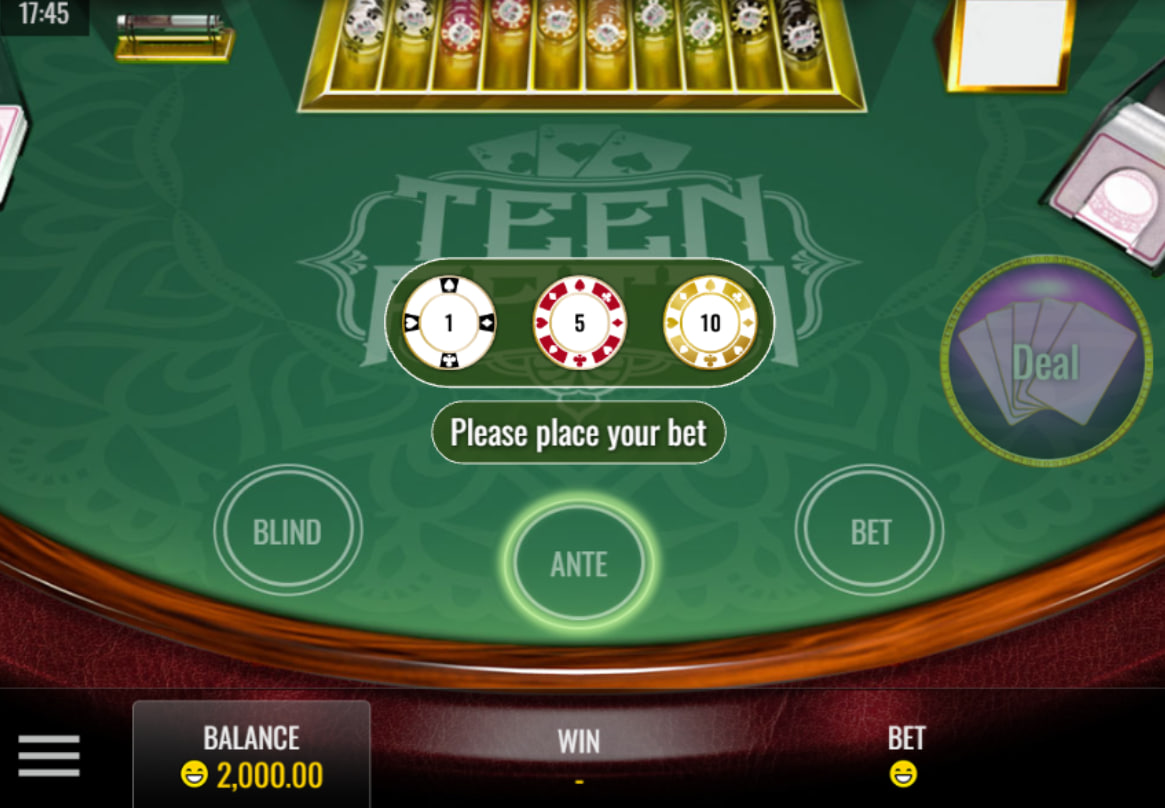
Rival's interface is built for efficiency rather than flair. The Deal button sits prominently on the right, and the transition from betting to card reveal is nearly instantaneous. There are no flashy animations to slow down your hourly hand rate, which is a double-edged sword. You can churn through 100 hands in minutes, but if you are on a tilt, the 104-card deck will eat a $2,000 balance faster than you can click “Live Help.”
- The game utilizes two standard 52-card decks, totaling 104 cards, making traditional card counting nearly impossible.
- Hand rankings follow the strict hierarchy where a Trio beats a Pure Sequence (Straight Flush), which in turn beats a standard Sequence.
- The “No Game” rule triggers if the dealer's High Card is lower than a Queen, resulting in a push for Ante/Bet but a loss for the Blind.
- A Colour (Flush) pays 1:1 on a standard Bet, which barely keeps the balance afloat given the cost of the Play bet.
- Support is integrated directly into the UI via the Live Help button, connecting players to [email protected].
- Tie-breakers are decided by the single highest-ranking card if the hand ranks are identical.
The design is utilitarian, focusing on the green felt and the chips. It feels like a tool for serious gamblers rather than a source of entertainment. If you are looking for the “No Game” safety net found in some Poker variants, you won't find it here; the house is aggressive with its Blind bet collection. Still, for those chasing the 45:1 Trio, the math is fair, and the 97.23% RTP puts it in the upper echelon of table game returns.
FAQ
What is the RTP of Teen Patti by Rival?
The game features a high theoretical return to player (RTP) of 97.23%.
How does the No Game rule work?
The dealer must have at least a Queen High to qualify; otherwise, Ante and Bet are returned while the Blind bet is lost.
Where can I find the Teen Patti demo version?
The Teen Patti free play mode is available on the Respinix.com website.
What is the highest payout in this game?
A Trio on a Blind bet offers the maximum payout of 45:1.
Does the game use multiple decks?
Yes, Rival uses two standard 52-card decks for a total of 104 cards.