
Wild Chicken by Swintt is a 5×3 farm-themed slot where a high-payout Rooster rules the 10 paylines. The math model centers on a moving Wild mechanic that shifts left with every spin, demanding a strategic approach to bankroll management. Payouts peak at 10,000 coins for five Roosters, while three Scatters trigger the feature games. Including a $0.10 to $100 betting range and a card-based gamble feature, the game offers a high-friction experience for those chasing technical mechanics.
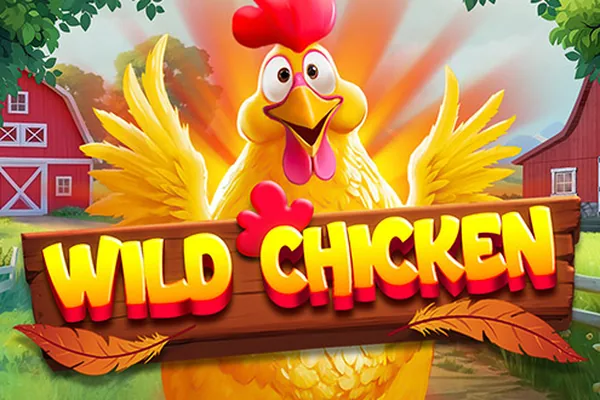
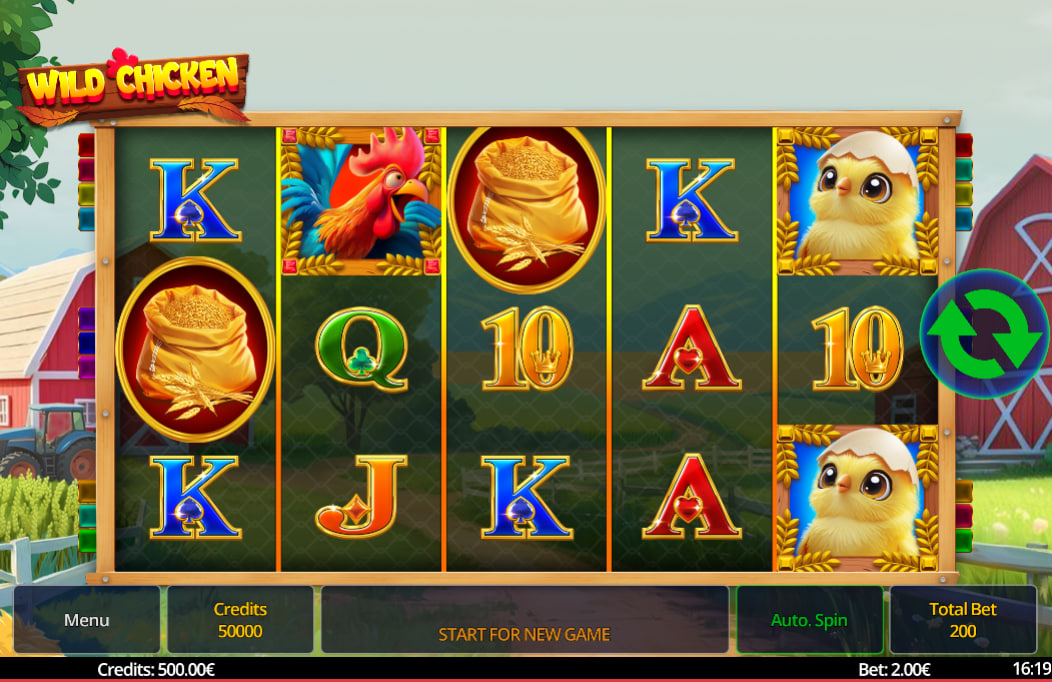
Wild Chicken operates with a 10-line setup that pays strictly from left to right. When you spin at the minimum of $0.10, you quickly realize how much the symbols are weighted toward the top. The Red Rooster is the undisputed king of the coop, yielding 10,000 coins for a five-of-a-kind hit. At a $1.00 bet, that is a $100 payout, which sounds solid, but the drop-off is steep. A four-symbol line of the same Rooster falls to 2,000 coins, and three symbols net you a mere 200. This creates a top-heavy payout structure where you are either hitting the ceiling or watching your credits slowly vanish.
The game uses a coin-based system where $1 equals 100 coins. With a maximum bet of 10,000 coins, or $100 per spin, high rollers can burn through a bankroll in minutes if the features do not connect. The hit frequency feels tight, and the “dead spin” streaks are real. You will find yourself grinding through endless rounds of J, Q, and 10 symbols that barely cover the cost of the spin. The duckling and chick symbols offer mid-tier relief, but they are mostly there to keep the illusion of winning alive while you wait for the Scatter or the Wild movement to kick in.
The Leftward Drift and Feature Mechanics
The most distinct mechanic in this farm is how the Wild symbols behave. Unlike standard slots where a Wild stays or vanishes, here, all Wilds move left by one position at the start of every new round. This creates a temporary “Sticky Wild” effect that can bridge gaps across multiple spins. But there is a catch. These moving Wilds are locked to the bet level where they were triggered. If you try to chase a win by upping your stake after a Wild lands, that Wild disappears from the grid for the new bet level. It is a brilliant way to keep players anchored to a specific bet size.
Feature games are the only way to escape the base game’s attrition. Landing 3 or more Scatters—represented by the golden bag of grain—triggers the bonus rounds. Swintt remains vague on the exact bonus hit rate, but based on the math model, you should expect to chase these bags for at least 150 to 200 spins. Once inside, the moving Wild mechanic becomes the primary engine for big wins, as they can stack and move across the reels to complete those high-paying Rooster lines. Without these features, the base game is a brutal war of attrition against your balance.
Barnyard Forensics: Blind Spots in the Corn
Wild Chicken hides its most punishing elements behind a simple interface, making it easy for casual players to walk into a mathematical trap.
Is the Risk Button a Mathematical Trap?
The Risk Button appears after every base game win unless you are in Autoplay mode. It offers a classic Red or Black card prediction to double your win. While it looks like a 50/50 shot, the game caps the risk bet at 50,000 coins. If you land a massive Rooster line that pays over $500, the game flat out denies you the chance to gamble. This suggests the math is designed to let you gamble small change, but once you hit a significant win, the developer pulls the plug to protect the house edge. It is a feature for “grinders” who want to parlay $0.20 into $0.80, not for those looking to turn a big win into a jackpot.
Why the Moving Wild is a Double-Edged Sword?
The moving Wild mechanic seems generous because it lasts for multiple spins, but it actually forces a high “cost of the session.” Because a Wild moves left one reel at a time, you feel compelled to keep spinning until it exits the first reel. If a Wild lands on Reel 5, you are essentially committed to 5 more spins to see its “full value.” This is a psychological anchor that prevents you from walking away after a win, as leaving the game with a Wild on the screen feels like leaving money on the table. In reality, that Wild might never connect with anything, but it keeps you clicking.
The Grinder’s Toolkit
Swintt has optimized the UI for players who value efficiency over flair. The space bar serves as the Play Button, allowing for rapid-fire sessions. Hidden within the Auto Spin menu are the real tools: win and loss limits. You can set the game to stop if your balance drops by a specific value or if a single win exceeds your threshold. Using these is mandatory in a high-friction environment like this. The game also features a “Take” button during the gamble phase, which is your only way out once the “Red or Black” screen starts staring you down.
- Wild Chicken uses 10 fixed paylines paying left to right.
- The Red Rooster is the highest-value symbol, paying 10,000 coins for five.
- Moving Wilds shift one reel to the left at the start of each new spin.
- The Risk Game (Card Gamble) is disabled for wins exceeding 50,000 coins ($500).
- Scatters trigger feature games but do not pay out on their own like standard lines.
- The maximum bet is capped at $100 per spin (10,000 coins).
- Sticky Wilds are bet-level dependent and do not carry over if the stake is changed.
- The game uses a specific conversion of $1 to 100 coins for all payouts.
FAQ
How does the moving Wild mechanic work in Wild Chicken?
Every Wild symbol on the reels shifts one position to the left at the start of a new round until it exits the first reel.
Can I change my bet while a moving Wild is on the screen?
Sticky Wilds are tied to the specific bet level where they appeared and will not carry over if you change your stake.
What is the maximum payout for the highest symbol?
The Red Rooster symbol pays 10,000 coins for a five-of-a-kind combination on any active payline.
Is there a limit on the Card Risk gamble feature?
Yes, the gamble game is unavailable for wins exceeding 50,000 coins and is disabled during Autoplay.
Where can I find the Wild Chicken slot demo version?
The free-play demo of this slot is available for testing on the Respinix.com website.