Step back to 2006 with Twin Player by Light & Wonder! This retro 4-reel slot uses wins from the 95.78% RTP Base Game to fuel a strategic 96.49% RTP Super Game.
Bonus Features in Twin Player Demo
| Feature Name | Description | Trigger / How it Works |
|---|---|---|
| Base Game | The standard mode of play with a default set of rules and payouts. | This is the default game mode upon loading the slot. |
| Super Game | An enhanced gameplay mode with a higher theoretical RTP of 96.49%. | Activated by choosing to play with credits accumulated in the Total Meter. |
| Total Meter | A separate balance where wins from the Base Game can be stored. | Wins from the Base Game can be transferred to the Total Meter instead of being collected. |
| Overlaid Symbols | Special Barcrest and Jackpot symbols appear on top of regular fruit symbols. | These symbols land randomly on specific reels overlaid on lower-value fruit symbols. |
What is the Twin Player Slot Game?
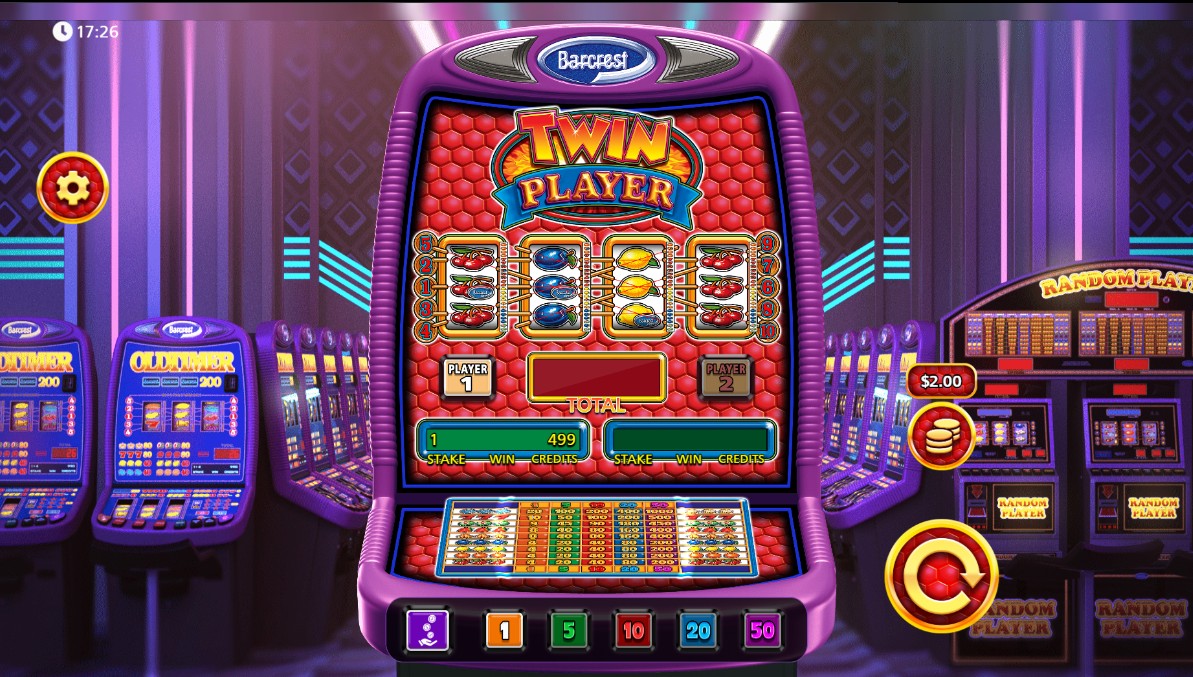
Twin Player is a retro-style, 4-reel slot that replicates the classic land-based fruit machine experience. Its name, “Twin Player,” does not refer to a multiplayer feature, but rather to its core dual-gameplay system: the standard Base Game and the enhanced Super Game, each with its own distinct RTP.
The game is a direct digital port of a popular 2006 Barcrest machine, now presented under the Light & Wonder banner. Its design strips away modern complexities, focusing instead on a pure, strategic loop of winning credits and deciding whether to bank them or use them to fund the more generous Super Game. The aesthetic is pure arcade—a digital cabinet set against a backdrop of other machines, complete with simple animations and classic sound effects. This setup appeals to players looking for a nostalgic trip or a straightforward gameplay challenge, placing it firmly in the Retro slots category. It’s a great example of a Classic slot you can try as a free demo on Respinix.
Understanding the Core Gameplay: Base Game vs. Super Game
The entire dynamic of the Twin Player game is built around the interaction between its two distinct modes. This isn’t about triggering a separate bonus round; it’s about making a conscious decision to switch from one mathematical model to another. Mastering this choice is the key to the game.
How Does the Base Game Work?
The Base Game is your starting point and the default mode of play. It operates on a 4×3 reel layout with 10 paylines. Here, you spin the reels using your main balance, and any winning combinations are paid out directly. The theoretical RTP for the Base Game is 95.78%. After any win, you face a critical decision: press ‘Collect’ to add the funds to your balance, or transfer the winnings to the ‘Total Meter’ to save up for the Super Game. This mechanic is reminiscent of classic Vegas-style slots, where player choice dictates the flow of the session.
What Triggers the Super Game and Why Play It?
The Super Game is triggered manually by the player once there are sufficient credits in the Total Meter. Instead of a random trigger, you choose when to activate it by selecting a bet level using credits from this meter. The primary incentive to play the Super Game is its increased theoretical return-to-player of 96.49%.
This 0.71% increase in RTP means that, statistically, your bets in the Super Game offer a better long-term return. While it doesn’t guarantee a win on any single spin, it shifts the mathematical odds slightly more in your favor. The Super Game uses the same reels and symbols, but the strategic context is different. You are playing with funds you have already won and risked, creating a tense and engaging loop that is rare in contemporary slots. It’s a system that requires more thought than just hitting the spin button.
Vlad Hvalov’s Expert Take:
“Don’t just blindly chase the Super Game. The key in the Twin Player demo is to understand bankroll management. Set a goal for the Total Meter. Maybe you’ll only risk wins below a certain amount, or perhaps you’ll accumulate a larger sum before switching modes. Testing these strategies risk-free is what the demo is perfect for.”
Key Symbols and Payout Structure
The paytable in the Twin Player slot is straightforward and consistent with its fruit machine theme. The symbols are crisp, clear, and instantly recognizable to anyone familiar with classic gaming. However, the game adds a unique twist with its special overlaid symbols.
The Role of Overlaid Barcrest and Jackpot Symbols
The most distinct feature on the reels are the Overlaid Symbols. These are not Wilds or Scatters. Instead, the special Barcrest and Jackpot logos appear directly on top of certain lower-value fruit symbols on specific reels.
They do not substitute for other symbols to create wins. Their only function is to form their own high-paying combinations. A line of three matching overlaid Barcrest symbols or three matching overlaid Jackpot symbols awards the game’s top prize of 20x your stake. According to the paytable, these symbols are restricted to certain reels and fruit pairings, adding a layer of predictability to their appearance. This system is a clever way to add high-value targets without cluttering the reels with extra symbols, a design choice seen in some classic games like Red Hot Repeater.
Standard Symbol Payouts
Beyond the special overlays, the paytable is filled with familiar icons. The Red Sevens are the highest-paying standard symbol, followed by watermelons, strawberries, and bells. The lower tier consists of plums, lemons, oranges, and cherries. All wins pay for three-of-a-kind combinations on one of the active paylines, starting from the leftmost reel. The structure is simple and easy to track, allowing you to focus on the core Base Game versus Super Game strategy.
Technical Specifications: RTP and Volatility Analysis
Understanding the numbers behind Twin Player is essential to appreciating its design. The game’s mathematics are transparent and directly influence the player’s strategy, which is a hallmark of older Barcrest designs.
Why Does Twin Player Have Two RTP Values?
Twin Player features two distinct RTP values because the Base Game and Super Game function as separate mathematical modes. The Base Game operates at 95.78% RTP, while the Super Game offers an improved 96.49% RTP. This design encourages a risk-reward strategy.
By transferring wins to the Total Meter and activating the Super Game, you are effectively “buying into” a mode with better statistical returns. This dual-RTP system is a core element of the game’s identity. It’s a more interactive approach than the fixed mathematics of slots like 777 Space or Joker Hunt Dice, where the RTP is constant regardless of how you play.
Assessing the Twin Player Volatility
Light & Wonder does not officially state the volatility for Twin Player, but extended play in the demo mode suggests it operates at a medium level. Wins are not exceedingly rare, but the larger payouts, especially from the overlaid symbols, require some patience.
The game’s structure smooths out the experience. The Base Game provides smaller, more frequent wins that sustain your balance, while the Super Game holds the potential for more substantial returns. This balance prevents the long winless streaks typical of high-volatility games but still offers more excitement than a low-volatility slot where wins are constant but small. The maximum win potential is capped, with the Total Meter automatically collecting when it reaches 10,000 credits, reinforcing its focus on sustained play rather than single massive jackpots.
Vlad Hvalov’s Expert Take:
“Treating this like a modern slot is a mistake. You aren’t hunting for a life-changing max win. You’re engaging with a system. The thrill in Twin Player comes from successfully building up your Total Meter and having a profitable Super Game session. It’s a game of small victories leading to a bigger one.”
Arcade Floor Flashback: Little-Known Facts
- A True Veteran: The game is a faithful recreation of a physical slot machine released by Barcrest in 2006, a time when online slots had a very different design philosophy. Playing it is like stepping into a time capsule.
- The Name Game: The “Twin Player” title has confused players for years. It has nothing to do with two players; it’s a direct reference to the twin modes of gameplay (Base and Super) that define its mechanics.
- Calculated Risk: The dual-RTP system was a common feature in old-school pub fruit machines in the UK. It was designed to reward players who were willing to risk more, making the gameplay more interactive and skill-based than simple chance.
A Look from the Other Side: A Relic or a Refreshing Change?
The strongest argument against Twin Player is its simplicity. For a player accustomed to Megaways, Infinity Reels, or narrative-driven bonus rounds like those in many Adventure themed slots, this game feels like a relic. There are no free spins, no wilds, no cascading reels, and no complex features to uncover. The gameplay loop is repetitive by design. For some, this lack of variety is a significant drawback, making the experience feel dated and potentially monotonous.
This viewpoint is valid for those seeking constant visual and mechanical stimulation. However, this argument overlooks the game’s core appeal. Its simplicity is its strength. Twin Player strips away the noise and focuses on a single, compelling strategic choice. It’s not about watching animations; it’s about actively managing your wins. This “less is more” approach provides a refreshing clarity and a different kind of engagement that many modern, feature-heavy slots lack. It proves that a game doesn’t need a dozen features to be compelling—just one good one.
Twin Player Compared to Other Classic Slots
When placed alongside other titles in the vast library of classic-themed games, Twin Player holds a unique position due to its interactive Super Game mechanic.
While a game like Joker Hot Reels from Playtech offers a more traditional experience with stacked wilds and a simple, fiery aesthetic, it lacks the strategic depth of Twin Player’s dual-RTP system. Similarly, Amusnet’s 100 Bulky Fruits focuses on providing a huge number of paylines on a larger grid, delivering its excitement through sheer volume rather than player choice. The closest comparison might be a slot with a gamble feature, but even that is different. In Twin Player, you aren’t risking a single win on a 50/50 bet; you are investing your winnings into a different mode of play with better long-term odds. It’s a more nuanced and less punishing system, setting it apart from its retro peers.
This game truly stands as a testament to the classic design principles of Barcrest, a developer known for creating engaging and thoughtful machines for the physical Casino floor.
Honestly, Twin Player isn’t going to be for everyone. If you’re looking for an epic story or dazzling animations, you’re in the wrong place. This slot is a time machine. It’s a throwback to an era when gameplay was about the machine, the math, and the player’s choices.
It’s a solid game. The dual-RTP system is genuinely engaging and makes every win in the base game feel important. It gives you a sense of control that is often missing from modern slots. For that reason, I recommend giving the Twin Player demo a try. It’s a perfect way to experience a piece of slot history and enjoy a pure, undiluted gaming challenge.
FAQ
What is the main feature of the Twin Player slot?
The main feature is the dual-game system, where you can use winnings from the standard Base Game to fund the Super Game, which offers a higher RTP of 96.49%.
What is the RTP of the Twin Player game?
Twin Player has two RTPs: 95.78% for the Base Game and 96.49% for the Super Game, reflecting the different mathematical models of each mode.
Does Twin Player have a free spins feature?
No, this classic slot does not include a free spins feature; its core mechanic is the strategic switch between the Base Game and the Super Game.
How do the Overlaid Jackpot symbols work?
The Jackpot symbols are special overlays that appear on top of fruit symbols. They do not act as wilds but form their own high-paying combinations when three land on a payline.
Is Twin Player a high volatility slot?
No, Twin Player is considered a medium volatility game, offering a balance between the frequency and size of payouts.
Can I test strategies on the Twin Player demo?
Yes, the free play version is ideal for testing strategies related to when you should collect wins versus when to risk them in the Super Game.
Who is the developer of the Twin Player slot?
The game was originally developed by Barcrest in 2006 and has been re-released by its parent company, Light & Wonder.
Where can I play the Twin Player slot demo for free?
The Twin Player demo game is available for free play on the Respinix.com website.