
Treasure Bowl by JDB is a low-volatility video slot built on one hard contrast: a very thin 3-reel, 1-payline base and a bonus that opens into a 3×3 chase with an X-Huge finish. The 96% RTP and 1,800x max win keep it modest rather than wild, but the feature changes the session enough to matter. It suits players who value a strong bonus shift more than busy spin-to-spin action.

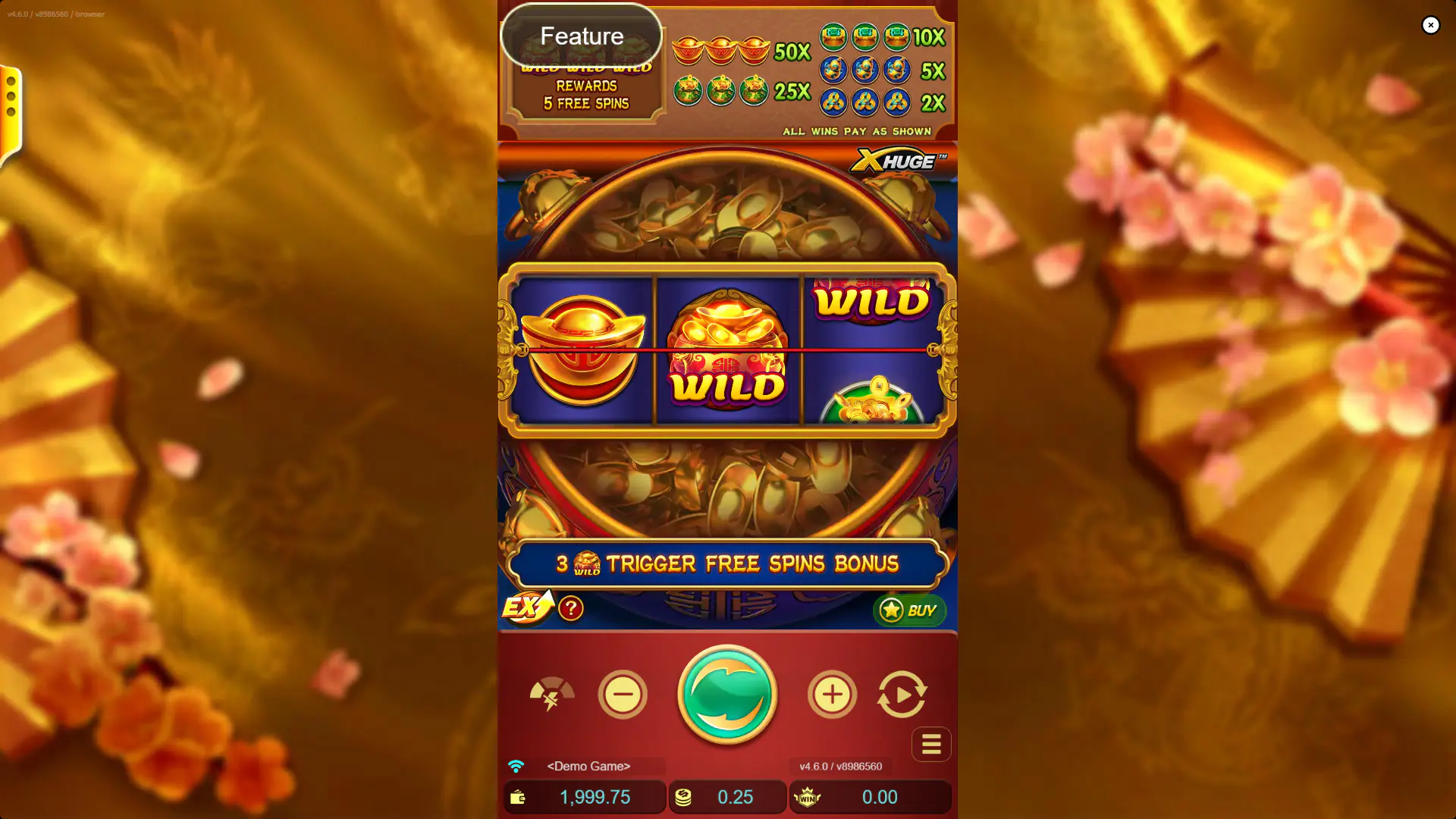
The base game is as bare as it looks. You are dealing with a 3×1 layout and 1 payline, so there is nowhere for weak pacing to hide and no extra reel traffic to fake momentum. I do like the honesty of that. Results are easy to read, the screen stays clean, and the game does not bury simple mechanics under decorative clutter. But a clean screen is not the same thing as a rich one, and regular spins can start to feel skeletal if you need steady action between features.
The Asian design works because it stays readable. Red, gold, and lucky-symbol styling give the slot a clear identity, while the compact UI keeps attention on the trigger path instead of wasting space on noise. That matters more here than in a busier 5-reel game, because Treasure Bowl is selling a hard contrast. The base is deliberately spare, so the feature has to feel like a genuine shift rather than a cosmetic interruption.
That shift starts when 3 wilds land. The same symbol also acts as the scatter, which is a neat fit for such a small game because it keeps the trigger language simple. Free Spins do the heavy lifting. Once activated, the slot opens into a 3×3 stage where symbols lock in place, extra spins can push the count as high as 8, and the whole point becomes filling positions rather than waiting for ordinary line hits. This is the part that gives Treasure Bowl real shape.
The second stage is the reason the slot still has an audience. Fill all 9 positions in the 3×3 feature and the game moves into X-Huge, a 1-spin premium state tied to the strongest payouts in the slot. That two-step ladder is smarter than the base game suggests. JDB could have settled for a plain free spins round and called it enough. Instead, the feature keeps escalating, and that extra turn gives the session a real target instead of a flat bonus loop.
Compared with Bull Treasure from the same provider, Treasure Bowl is the drier sibling. Bull Treasure gives you a 3×3 grid and 5 paylines from the start, while Treasure Bowl saves any real board expansion for the bonus and keeps the base much more restricted. Compared with classic 3-reel slots, Treasure Bowl is more structural because the feature changes the shape of the round instead of just lifting payout values. So the fit is easy to read. If you want a steadier base, Bull Treasure is easier to live with. If you want a harder before-and-after contrast, Treasure Bowl has the cleaner turn.
What demo should settle
Treasure Bowl is worth trying in demo first, but only if you test the right things. Check how quickly the 1-payline base starts to drag, whether the jump into the 3×3 stage feels big enough to refresh your interest, and whether the 9-position chase creates real tension or just more waiting. Demo can prove pacing, feature readability, and whether the board expansion is strong enough to carry the slot. It cannot prove how often the 1,800x ceiling will matter in real-money play, and it cannot make the base feel fuller than it is.
Treasure Bowl suits players who are happy to forgive a sparse base if the feature genuinely changes the game once it lands. Skip it if you want dense spin-to-spin activity, layered side systems, or a slot that spreads its value more evenly across the whole session. What still works here is simple: JDB built a low-volatility slot around one sharp structural turn, and for the right player that turn is enough.