Paylines
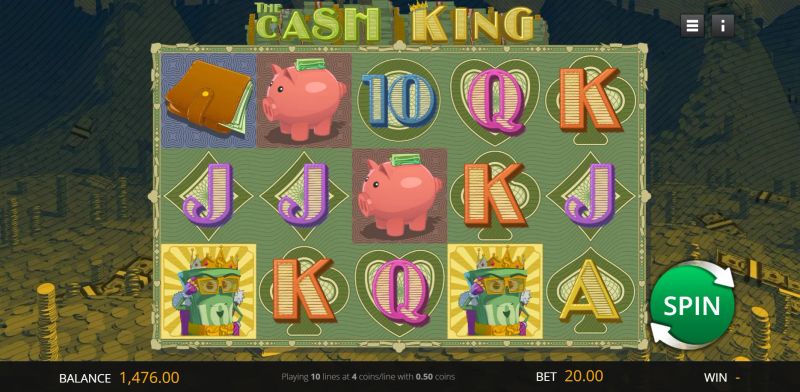
10 paylines (player-selectable 1-10)
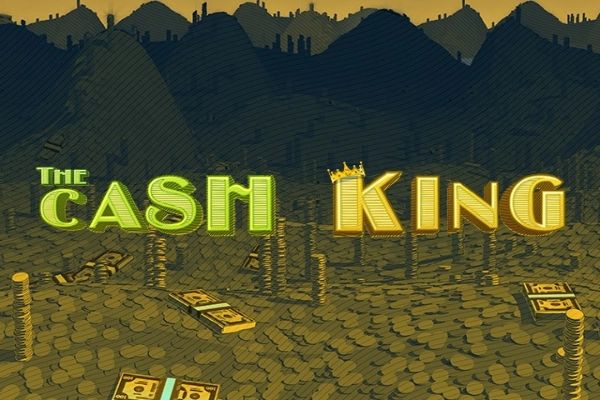
The Cash King doesn’t try to dress up its obsession. The whole slot is just a love letter to piles of money. You get a 5×3 grid sitting on a stage of overflowing gold coins, with a faintly green money-felt backdrop behind the reels. The logo wears a tilted crown. The symbols are smiling pink piggy banks, briefcases stuffed with banknotes, and big cartoon CASH STASH bags. That’s it. No story, no characters, no narrative beyond money is good.
Mechanically it’s a 10-payline lines game from Genii, played left-to-right only. RTP sits at 95.45% on most operator builds, though you’ll see 96.5% quoted in places since the math is configurable. Volatility runs high, but not in the way you might expect. The base game pays modestly. The top symbol caps at 140 coins for a five-of-a-kind, which is honestly on the low side, and the paytable headline brags about 7,000 coins total. That’s a small ceiling by modern standards.
Where the action lives is the Cash Stash Feature. Land three or more Cash Stash scatters anywhere on the reels and you get sent to a pick screen. Nine briefcases sit on a grid. You pick four. Each one reveals a cash prize tied directly to your triggering bet, and the four values add up to your total payout. No retriggers, no chained bonus, no free spins layer underneath. One round, four picks, done. It’s clean.
Two Wild types help fill the gaps between features. The Stacked Wild can land multiple positions in a single column, substituting for everything except the Cash Stash scatter. The Random Wild drops onto a random reel position during the base game and converts whatever’s there. The combination keeps base spins from feeling completely dead while you wait for the bonus.
Bet range goes from $0.01 up to $25 with five chip tiers, so it scales for tiny budgets and reasonable mid-stakes play. No buy bonus option, which feels almost retro now. The lack of free spins is also unusual for Genii, since most of their catalog leans on them as the main attraction. Cash King commits to its one-feature design instead. Worth a few sessions if you like pick-bonus volatility and don’t mind a base game that mostly serves as the bridge to it.