Oxygen 3 is a high-variance underwater slot from Elk Studios featuring a 6×7 grid with cluster-pay mechanics. The game utilizes an Avalanche engine where winning symbols vanish to trigger Oxygen Bubbles with doubling multipliers. Set in a mechanical deep-sea environment, it offers a Bonus mode with persistent multipliers and a Multiplier Strike feature. With bets ranging from $0.20 to $100.00, the gameplay focuses on escalating multiplier chains and unique Clam-triggered features.
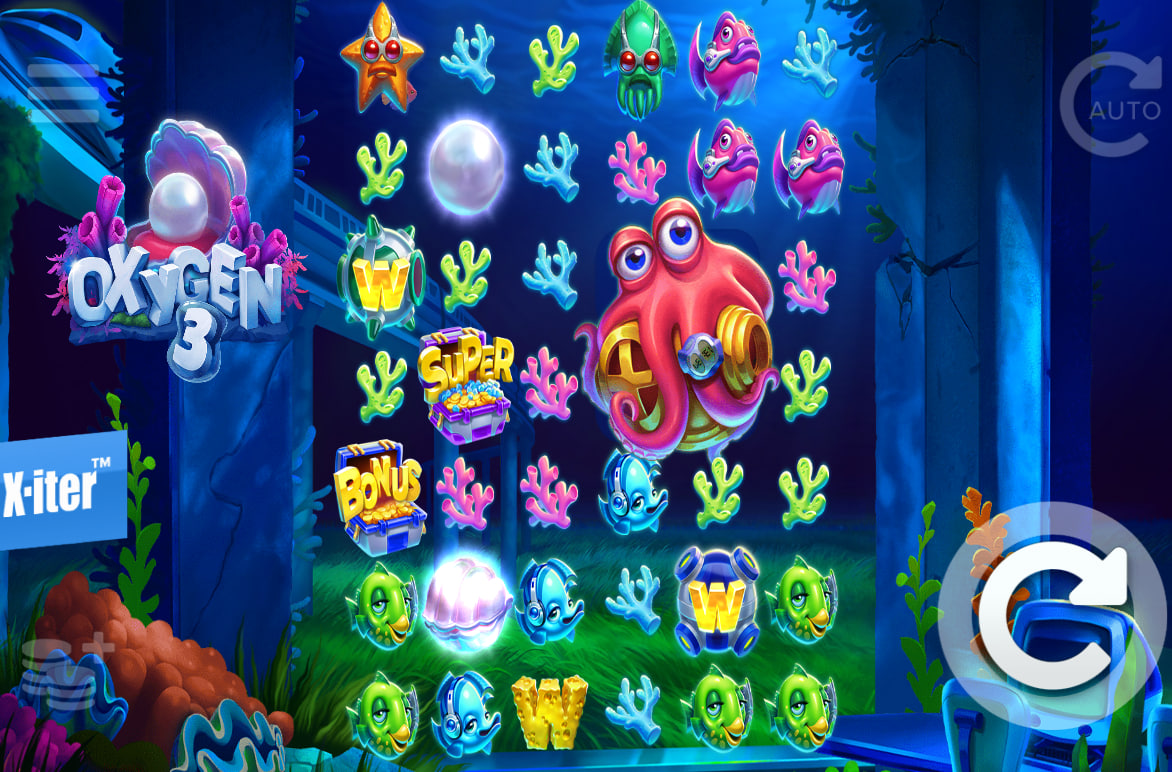
The Avalanche engine is the heartbeat of this abyss. When you land five or more matching symbols touching vertically or horizontally, they vanish, leaving the remaining icons to tumble down. This creates a vacuum for new symbols to drop in from above. The cycle repeats until the winning streaks dry up. Unlike standard slots, the real action starts after the win. The first time a symbol is cleared, an Oxygen Bubble triggers on that spot. If you manage to clear another winning symbol over an existing bubble, the multiplier doubles. It starts at x1, but things escalate quickly when the clusters overlap.
Oxygen 3 demands a specific kind of patience. The base game can feel like a war of attrition where you watch your $1.00 bets slowly erode. The 22.5% hit frequency—if we estimate based on Elk’s typical cluster mechanics—means you’ll see a lot of empty drops. You are essentially fishing for the Clam symbol. This Wild is the key to the kingdom, triggering the Starfish, Squid, or Pearl features immediately after a win. The Pearl is the rarest of the bunch, limited to just one on the grid at any time, but its presence usually signals a shift in momentum.
One major gripe for any seasoned grinder is how the bubbles behave. In the normal mode, they vanish once the avalanche sequence ends. This creates a high-friction environment where you need a massive chain of wins to see double-digit multipliers. However, the Bonus mode changes the math entirely. Bubbles and their values become persistent between bonus drops. This is where the volatility truly shows its teeth. If you don’t build a solid multiplier field early in the bonus, the session will likely end in a total wash.
The visual design supports the gameplay loop perfectly. Symbols like the Octopus clutching gold or the Starfish with sunglasses add a bit of personality, but the mechanical Squid and metallic Fish icons remind you that this is a processed, high-variance machine. The UI is clean, hiding the turbo mode and X-iter options behind a single tap, which is great for mobile users but requires some hunting for desktop players. If you are looking for a low-variance, “safe” slot to clear a bonus, Oxygen 3 will probably leave you gasping for air. It is built for those who can handle long dry spells in exchange for an explosive multiplier strike.
Under the Microscope: A Deep Dive into the Ocean Floor
The core loop revolves around the Oxygen Bubbles, and understanding their physics is crucial. Unlike the symbols, these bubbles are not affected by gravity. They stay locked in their grid position while symbols fall through them. This creates a strategic layer where you want wins to happen at the bottom of the grid first, hoping the falling symbols above will trigger subsequent wins on those same multiplier spots.
The Multiplier Strike Protocol
Before a symbol drop even begins, the Multiplier Strike feature can activate. This randomly places clusters of Oxygen Bubbles on the grid. It is a massive shortcut to the big wins because it removes the need to “earn” the first layer of x1 multipliers. In my experience, these strikes are the primary way to survive the high-variance swings of the base game. Without them, you are relying solely on back-to-back cluster wins to generate any meaningful multiplier value.
The Clam Feature Ecosystem
The Clam Wild is the most versatile tool in your arsenal. When it participates in a win, it triggers one of three randomized underwater mechanics. The Starfish and Squid features focus on grid manipulation, while the Pearl is clearly the premium outcome. Since only one Pearl can exist at a time, its utility is maximized. It acts as a focal point for the multiplier accumulation, often being the reason a dead spin turns into a massive payout.
The Grinder’s Audit: Hidden Risks and UI Efficiency
For those who treat slots like a job, Oxygen 3 offers a few technical nuances that are easy to miss. The X-iter menu is where Elk hides the true power of the game, allowing for direct feature buys that completely bypass the base game grind. But this comes at a steep price, often requiring a 100x or even 500x bet commitment.
The Mathematical Trap of the Base Game
The biggest blind spot for casual players is the multiplier reset. In the normal game, an Oxygen Bubble is just a temporary boost. You might double a spot to x4 or x8, only for the entire field to wipe on the next spin. This makes the base game a high-risk environment where you are essentially paying for the chance to trigger the persistent multipliers of the Bonus mode. If you aren’t hitting the bonus within 150-200 spins, your bankroll will feel the burn of the 100-coin-per-bet structure.
Ergonomics and Session Speed
Elk Studios has optimized the UI for speed. The Spin button doubles as an Auto Spin trigger if held down, which is a lifesaver for long sessions. The game also supports keyboard shortcuts for those on desktop, allowing you to cycle through the X-iter options or toggle the turbo mode without moving the mouse. These small touches show that the developer is catering to the “grinder” demographic that values session efficiency over flashy animations.
The Abyss Ledger
This section breaks down the technical and historical nuances that define the Oxygen 3 experience. While the game looks like a standard underwater slot, the underlying logic is a sophisticated evolution of the cluster-pay genre.
- The grid is a fixed 6×7 layout, meaning there are 42 symbol positions active at all times.
- Cluster wins require a minimum of 5 identical symbols, but the top-tier Octopus symbol pays significantly more even at lower cluster sizes.
- The minimum bet starts at $0.20, making it accessible for low-stakes testing before committing to higher levels.
- The “Super Bonus” chest visible in the screenshots suggests a secondary, more volatile bonus tier with enhanced bubble persistent mechanics.
- The game uses a strict vertical gravity model; symbols never slide sideways unless a specific feature forces it.
- The first Oxygen Bubble in a sequence always starts at x1, but the doubling is exponential, not additive.
FAQ
How do the Oxygen Bubbles work in the base game?
Bubbles activate on winning positions and double their multiplier value whenever a new winning cluster is cleared over them during a single avalanche.
What is the difference between Normal and Bonus mode?
In Bonus mode, all Oxygen Bubbles and their multiplier values stay on the grid between drops, whereas they reset in the normal game.
What features does the Clam symbol trigger?
Winning with a Clam Wild activates either the Starfish, Squid, or the high-value Pearl feature to modify the grid or multipliers.
Where can I find the Oxygen 3 demo version?
The Oxygen 3 slot is available for free play on the Respinix.com website.
Can I play Oxygen 3 on mobile devices?
Yes, the game is fully optimized for mobile browsers with a specialized UI that supports vertical play and touch controls.