
Neon Capital Bonus Buy from Evoplay is a high-energy 5×3 slot with 10 paylines set against a synthwave Vegas skyline. The game centers on a lucrative collection mechanic where Wilds gather cash values from Skyline symbols during Free Spins. With a 95.98% RTP and medium-high volatility, it offers a 10,000x max win. Players can trigger the bonus naturally or use the Bonus Buy feature to jump straight into the action, chasing progressive multipliers that scale up to x10 for massive returns.

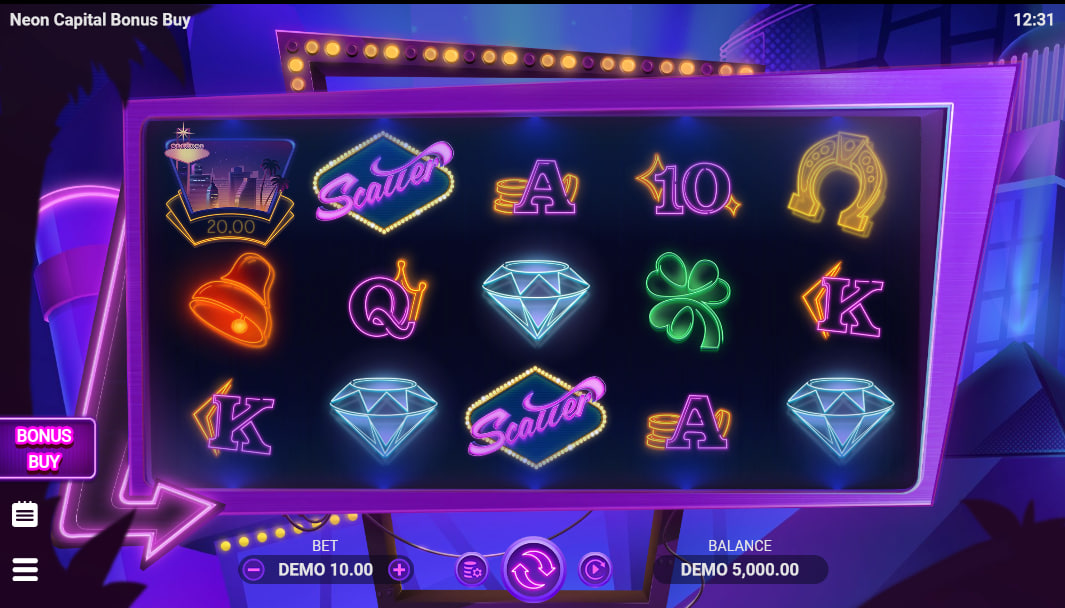
Neon Capital Bonus Buy operates on a 5×3 grid with only 10 fixed paylines, which is a setup that usually screams “brutal variance.” In my sessions, the base game felt like a slow bleed. You are looking at premium symbols like the Diamond, which pays 200x for five of a kind, but getting those to line up on just 10 lines is a statistical mountain to climb. The rest of the paytable, specifically the card ranks from 10 to A, offers a measly 10x for a full line, which barely covers the cost of the spins you wasted getting there.
The design relies heavily on the “Skyline” symbols. These are your money makers, carrying values from 2x all the way up to a staggering 2,000x. The catch? In the base game, they are mostly blockers. Unless you land five of them on a line for a 20x payout, they just sit there taking up space where a Wild or a Diamond should be. It is a classic psychological hook—showing you the money you can’t have until the bonus triggers.
Why the 10-Line Model Punishes the Casual Player?
The choice of 10 lines is a deliberate move to concentrate value into fewer winning combinations. This means you will see a lot of “near misses” where symbols land just one row off the active line. For a gambler, this creates a high-friction environment. You aren’t getting the constant dopamine hits of a 243-way slot; instead, you are grinding through 200 spins just to see one significant connection.
The visual feedback is sharp, with neon zaps and a synthwave soundtrack that keeps the energy high, but the reality is a war of attrition. If you aren’t hitting the Scatter symbols, the 95.98% RTP starts to feel much lower. The animations for the Skyline symbols are slick, but they serve as a constant reminder that the real game hasn’t started yet.
Aesthetics vs. Payout Efficiency
Evoplay aimed for a retro-future vibe, and they nailed the polish. The UI is clean, hiding the turbo mode behind a simple toggle, but the “High Voltage” feature is where the design meets the math. When the game decides to zap the reels, it is one of the few times the base game feels alive. However, don’t be fooled—the random nature of this feature means it often triggers when you have the lowest possible stakes or no Wilds to capitalize on the transformation.
The Dark Side of the Neon Strip
Understanding the math behind the Bonus Buy menu is the difference between a calculated risk and pure tilt. Neon Capital offers three tiers: 10, 15, or 20 spins for 50x, 92x, and 140x your bet respectively. On paper, the 140x option looks like the best value because it gives you more time to hit the x10 multiplier. But in practice, you are paying a massive premium for a bonus that can still return 0x if the Wild “Collector” decides to stay hidden.
The Bonus Buy Trap for the Impatient
The 50x buy is the most dangerous. With only 10 spins, you have almost zero margin for error. To reach the second level of the progressive meter (the x2 multiplier), you need 4 Wilds. In a 10-spin session, that is nearly impossible unless the RNG is heavily in your favor. You are better off saving the bankroll for the 140x buy or grinding the base game, as the 50x buy often results in a 10x-15x return, which is a fast track to liquidation.
The “High Voltage” Illusion
The High Voltage feature is marketed as a savior, but it is a “guaranteed” mechanic with a catch. It only triggers when a Wild is present but no cash symbols are on screen. While it replaces 3 to 6 symbols, there is no guarantee those symbols will be high-value. I’ve seen it zap the reels only to provide three 2x symbols, turning a potential big win into a measly 6x collection. It is a safety net made of thin glass.
Circuit Board Insights
The real potential of this machine is locked behind the fourth level of the multiplier scale. Reaching that x10 boost is the only way you are ever seeing that 10,000x max win. The game hides the exact hit frequency for the top-tier multiplier, but based on the volatility, expect it to be a rare event that occurs once in thousands of bonus rounds.
- The Skyline symbol’s 2,000x value is the “Mega” prize of the game, but it rarely appears outside of the later stages of the Free Spins.
- The progressive meter does not reset between retriggers; once you hit a multiplier level, every subsequent Wild collection is boosted.
- Using the Spacebar as a hotkey for spins is essential for grinders looking to cycle through the dead-spin phases of the base game.
- The “Big Vegas” sign is a mid-tier symbol that pays 50x for five, making it more valuable than most players realize during the heat of the session.
- Technical disruptions void all plays, which is a standard disclaimer, but in high-variance games like this, a crash during a x10 multiplier sequence is the ultimate nightmare.
- The Wild symbol is the only symbol that matters once the bonus starts; everything else is just noise.
The 95.98% RTP is respectable, but the Medium-High volatility means your session will be a rollercoaster. If you enjoy the “Fish” style collection mechanics but want a more aggressive, neon-drenched atmosphere, Neon Capital Bonus Buy delivers. Just don’t expect the Vegas lights to be kind to a small bankroll.
FAQ
What is the maximum win potential in Neon Capital Bonus Buy?
Players can win up to 10,000x their total stake through the progressive multiplier levels in the bonus round.
How does the High Voltage feature work?
This random trigger replaces 3 to 6 standard symbols with Skyline cash symbols when a Wild lands without any targets to collect.
Where can I find a demo version of the Neon Capital Bonus Buy slot?
The full demo version of the Neon Capital Bonus Buy slot is available for free play on Respinix.com.
What are the Bonus Buy options in this game?
You can purchase 10, 15, or 20 free spins for 50x, 92x, or 140x your current bet respectively.
What is the RTP of Neon Capital Bonus Buy?
The slot features a default return to player (RTP) rate of 95.98%, reflecting its medium-high volatility profile.