
Mahjong Ways by PG Soft is a medium-volatility video slot that gets its value from cascading wins, transforming gold symbols, and a multiplier ladder that grows without turning the screen into chaos. The Mahjong theme is clean and readable rather than flashy. It fits players who prefer controlled momentum over constant bonus clutter, especially if they already like cascade slots that reward patience more than noise.
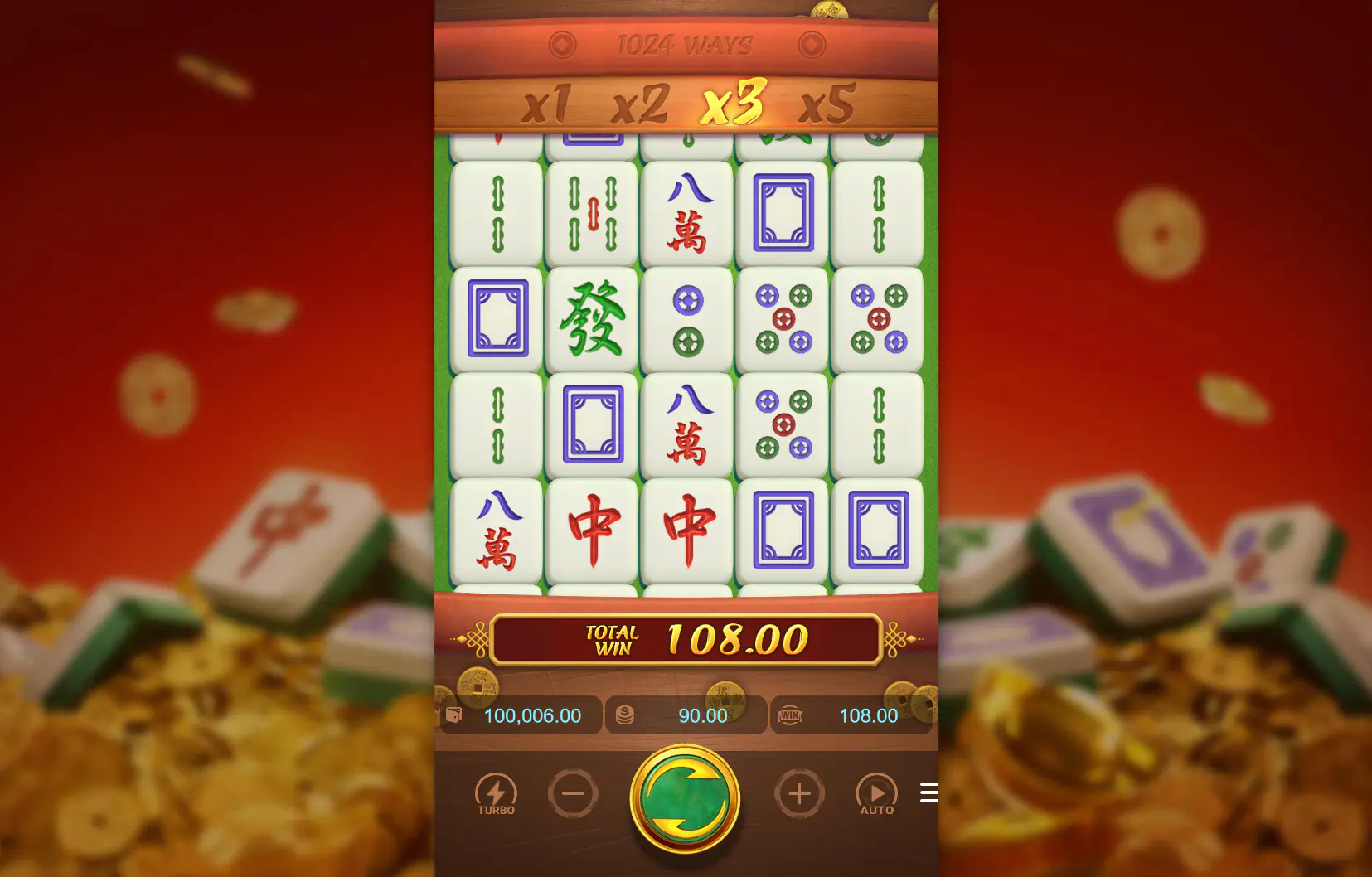
The base structure is clean. Wins land on adjacent reels from left to right, symbols disappear after a hit, and new ones drop in for the next round. The multiplier above the reels starts at x1, moves to x2 after a first-round win, to x3 after a second-round win, and to x5 from the fourth cascade onward. I like that progression because it is easy to read in real time. There is no confusion about where extra value comes from.
The gold plated symbols are the real identity piece. They appear on reels 2, 3, and 4 only, and if one of them takes part in a winning cascade, it transforms into a Wild on the next drop. Wilds substitute for every regular symbol except Scatter, so a good sequence can snowball fast without the game needing sticky panels, expanding reels, or gimmick clutter. That economy is a strength. It gives Mahjong Ways a smoother tempo than many modern Asian-themed slots that bury simple ideas under too many extra layers.
Free spins stay close to the same design logic instead of reinventing the game. You trigger them with 3 Scatters for 12 free spins, and every extra Scatter adds 2 more. During the feature, the cascade multiplier ladder upgrades to x2, x4, x6, and x10. Free spins can retrigger, which matters here because the boosted ladder changes even modest cascade strings into serious rounds. Still, this is not a bonus that fixes a weak slot. It just sharpens what the base game already does.
The math profile is more interesting than it first appears. Hit frequency is 28.54%, with 28.05% coming from the main game and only 0.49% from free spins. That split tells you the slot spends most of its time feeding value through regular cascade activity rather than waiting on bonus drama. The advertised 25,000x ceiling looks huge, but the simulated max exposure listed at 2,893x is the more grounded number if you care about how the game behaves across long sessions. I trust that number more when judging real session shape.
Compared with Mahjong Ways 2, this first game is less explosive and more disciplined. Compared with heavier PG Soft releases that lean harder on spectacle, this one reads faster and wastes less screen space. The flip side is obvious: if you want constant feature noise, buy-style shortcuts, or frequent top-end swings, Mahjong Ways can feel almost too polite.
Play the demo first if you want to check two specific things: how often gold symbols actually convert into meaningful Wild chains, and whether the base-game multiplier rhythm feels satisfying before free spins even arrive. Demo can show reel readability, cascade pace, and whether the mechanic stays interesting after 50 to 100 spins. It cannot prove how often a 25,000x headline will matter in real play.
Mahjong Ways still works because it knows where to stop. It suits players who like readable mechanics, medium volatility, and slots that build pressure through repeatable structure rather than chaos. Skip it if you need loud bonuses to stay engaged. Try it if you want one of PG Soft’s cleaner momentum games, not one of its busiest.