Candy Blitz is a high-volatility scatter pays slot from Pragmatic Play set on a 6×5 grid. Ditching traditional paylines, it requires eight or more matching symbols anywhere to trigger wins and activate the cascading tumble system. A dedicated Multiplier Reel shifts with every cascade, offering values up to x500. The game features a 96.08% default RTP, a $0.20 to $240.00 bet range, a 10,000x maximum win cap, and a free spins bonus where the baseline multiplier starts at x2.

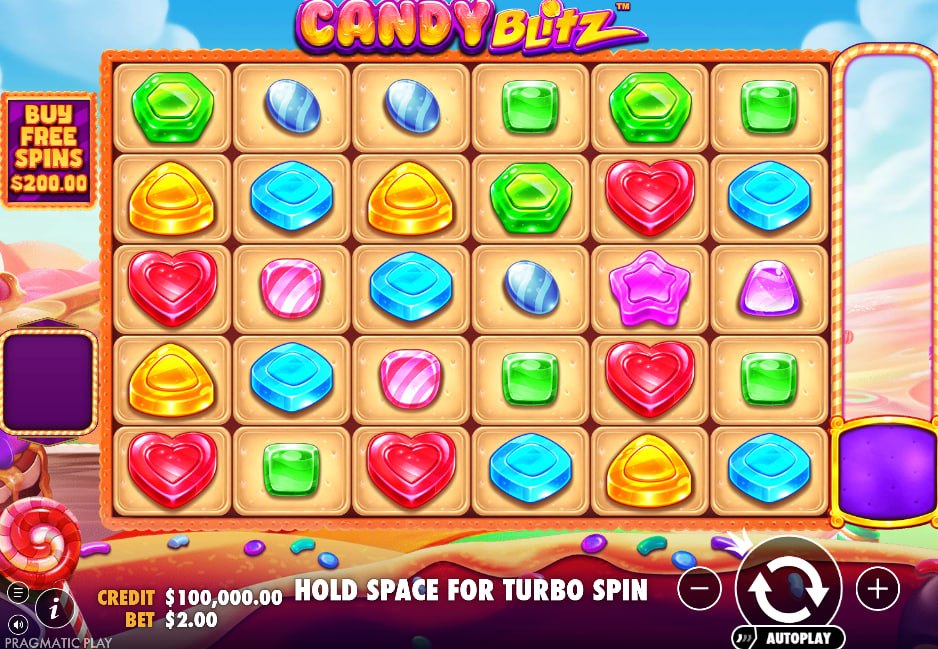
The 6×5 grid operates on a scatter pays engine where winning combinations trigger a cascading sequence, clearing the board to let new blocks drop into place. Every single spin introduces a dedicated Multiplier Reel on the right side of the screen, showcasing five random multiplier values. All wins generated on the main grid are multiplied by the bottom most value on this specialized tracking column. When a winning cluster pops and the remaining symbols cascade down, the elements on the Multiplier Reel also drop by one position, opening up the possibility for compounding payouts. The available values on this tracking column range from a basic x1 up to a massive x500, though the highest figures remain exceptionally rare during standard gameplay.
This mechanics package is built for high risk players who understand that the base game is largely a war of attrition. Grinding through 200 spins in demo mode reveals that small hits frequently get swallowed by the cost of the spin, as the game relies heavily on building long, consecutive tumbling sequences to reach substantial payouts. Players looking for steady, incremental balance growth will find this structure deeply frustrating because the individual symbol values are remarkably low without the assistance of the extra tracking reel. The design deliberately pairs a lighthearted, colorful theme with a brutal variance profile, a common tactical choice by this developer to keep players engaged through visual distraction while the math model extracts the bankroll.
Analyzing the Blind Spots of the Candy Grid
The sweet presentation masks several technical hazards and engineering choices that directly impact how quickly your balance fluctuates during a session.
Why is Buying the Bonus a Mathematical Trap?
Purchasing the bonus round instantly for a flat fee of 100x the total bet alters the default return percentage in a way that favors the house. The theoretical return to player drops from 96.08% in the standard game mode down to 96.02% when using the direct purchase option. While a drop of 0.06% sounds negligible on a single spin, it establishes a tighter mathematical ceiling for long term sessions, turning the shortcut into an efficiency tax for impatient players.
How Do Blocker Symbols Dictate the Flow of Cascades?
Low tier heart and round candies act as functional blockers due to their sheer frequency on the 6×5 grid. The payout for landing eight or nine matching low value symbols sits well below the initial stake, meaning a small cascade often costs more than it returns. These symbols clog the upper rows during a tumble, halting momentum before the Multiplier Reel can drop down to the high value positions.
What Are the Hidden Efficiency Tools for High Speed Grinding?
The interface hides specific keyboard shortcuts designed for players who prioritize raw spin volume over visual animations. Holding down the Space bar or the Enter key bypasses the standard spin delay, forcing the game into a persistent turbo state that completes rounds in less than a second. This mechanical optimization completely strips away the casual pacing, transforming the slot into a rapid fire mathematical calculator.
The Financial Realities of the Paytable
Navigating the payout structure reveals a massive disparity between the top tier symbols and the bottom tier filler items.
The blue star candy represents the absolute peak of the standard paytable, delivering a 100x payout when a cluster of 12 to 30 matching blocks lands on the board. The pink heart candy occupies the next tier, returning 20x for the maximum cluster size, followed by the green hexagonal candy at 10x. The remaining mid tier blocks scale down rapidly, with yellow and purple candies offering 8x and 6x respectively for maximum coverage. The lower end of the matrix consists of four smaller candy shapes that return between 1.5x and 5x when you completely fill the screen, making them mathematical dead weight unless a high multiplier is active at the bottom of the tracking reel.
The Scatter symbol, represented by a striped chocolate gem, appears across all six columns and controls entry to the primary feature. Landing four, five, or six Scatters awards 10, 12, or 14 free spins respectively, but these symbols do not carry an independent monetary payout value on their own. The math model lacks a standard Wild symbol entirely, meaning there are no substitute components to help bridge gaps on the grid, forcing you to rely purely on natural matches of eight or more identical icons.
Exploring the High Variance Bonus Architecture
The true volatility of the game manifests completely during the free spins mode, where the minimum available multiplier undergoes a permanent upgrade.
Triggering the round alters the Multiplier Reel mechanics by completely removing the x1 modifier from the pool of potential outcomes. The baseline value shifts to x2, ensuring that any successful cluster hit during the bonus receives at least a double payout. Retriggering the sequence is possible by landing another set of four, five, or six Scatters during the active round, which appends 5, 8, or 10 extra rounds to the current counter. This feature employs a completely unique set of reels that alters the symbol distribution, slightly increasing the likelihood of consecutive tumbles.
The absolute ceiling for any single round is strictly capped at 10,000x the initial stake. If the accumulated total across a free spins sequence hits this 10,000x limit, the game engine executes an immediate shutdown protocol. The software instantly forces the round to end, awards the capped payout to the balance, and voids any remaining free spins left on the counter. This hard stop prevents statistical outliers from overstretching the payout limits, protecting the casino’s margin against extreme compounding streaks on the Multiplier Reel.