KingMidas Games introduces Toridama Rock Paper Scissors, a unique online casino game that reimagines the classic hand contest with strategic depth. Its atmosphere blends quirky formality, featuring business-attired chicken opponents, with a clean, comic-book visual style. Players engage by choosing Rock, Paper, or Scissors against three distinct adversaries simultaneously, rather than a traditional reel layout. The core gameplay revolves around tiered payouts based on the collective results of these three encounters. This randomly triggered bonus can significantly enhance payouts if players defeat opponents whose hands glow golden, with the most fortunate outcomes leading to substantial multipliers. The game also provides statistical roadmaps of past opponent choices, inviting a degree of tactical consideration. Toridama Rock Paper Scissors offers a fresh perspective for those seeking a decision-based wagering experience beyond standard slot mechanics.

KingMidas Games presents Toridama Rock Paper Scissors, a title that elevates the universally understood contest of hands into a surprisingly layered wagering experience. This is not merely a digital rendition of a playground pastime; it’s a structured challenge demanding tactical consideration, where outcomes against multiple opponents and randomly appearing enhancements dictate financial returns. The presentation adopts a clean, almost comic-book aesthetic, with sharp lines and bold colors, focusing the player's attention squarely on the upcoming choices and potential rewards.
Ambiance and Thematic Execution
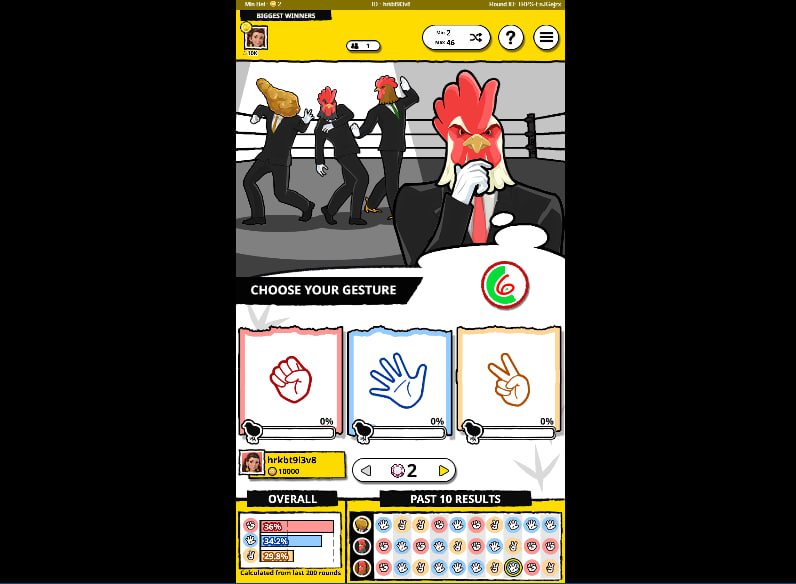
The immediate impression of Toridama Rock Paper Scissors is one of quirky formality. Players find themselves in a stylized arena, facing off against a trio of avian adversaries, each with a distinct, if somewhat comically rendered, persona suggested by their head icons. These are not ordinary fowl; they are depicted as business-attired roosters, adding a humorous, almost surreal layer to the familiar hand game. The color palette is predominantly bright yellows, blacks, and whites, creating a high-contrast environment that is easy on the eyes and effective in highlighting crucial game elements like betting options and outcome displays. The sound design complements this with clear, concise effects for selections, reveals, and wins, maintaining a professional yet engaging atmosphere without unnecessary distractions. This visual and auditory setup creates an environment where the simple core mechanic is treated with a surprising degree of seriousness, inviting players to approach each round with focused intent.
The overall presentation leans towards a minimalist yet impactful style. There are no elaborate background narratives or overly complex animations. Instead, the focus is on the immediate action: the selection of Rock, Paper, or Scissors, and the subsequent reveal of the opponents' choices. This directness is a strength, allowing players to quickly grasp the game’s flow and concentrate on the strategic elements introduced through the multi-opponent format and bonus opportunities. The imagery of formal chickens as opponents injects a unique brand of levity, preventing the game from feeling sterile while still emphasizing the competitive, decision-making core.
Core Gameplay Mechanics and Payout Structure
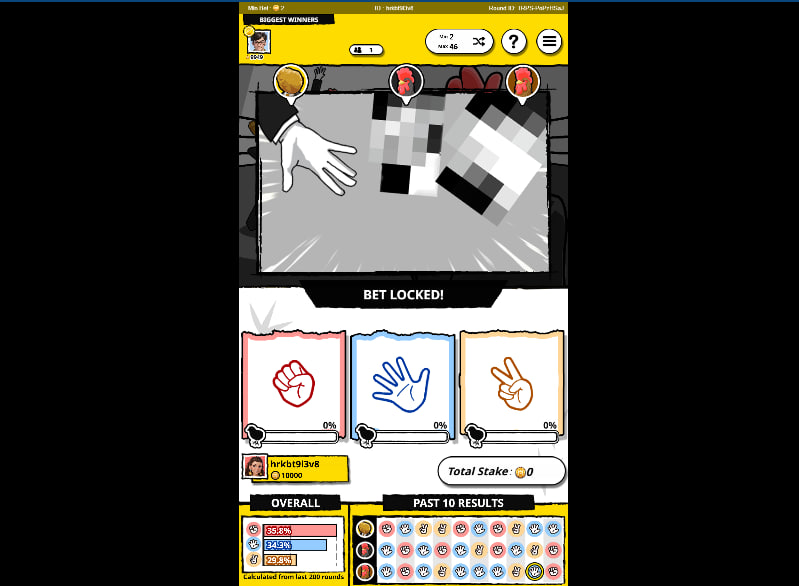
At its heart, Toridama Rock Paper Scissors operates on the fundamental principles of the classic game: Rock crushes Scissors, Scissors cut Paper, and Paper covers Rock. However, the slot introduces complexity by pitting the player against three distinct opponents simultaneously in each round. Before a round commences, the player selects their gesture – Rock, Paper, or Scissors – and places a wager. Once the bet is locked, the three avian opponents reveal their chosen gestures. The outcome of the round, and consequently the payout, is determined by the aggregate results of these three individual encounters.
The base payout system is tiered according to the number of wins, draws, and losses (referred to as “misses”) the player achieves against their three opponents. For instance, securing three wins against all opponents yields a 6x multiplier on the stake. Achieving two wins and one miss results in a 1.5x payout, while two wins and one draw awards a 2x payout. A scenario with one win and two draws also provides a 1.5x return. Interestingly, achieving three draws grants a modest 0.5x payout, acknowledging the stalemate. Conversely, combinations such as three misses, or one win alongside two misses, result in no payout for that round. This multi-layered outcome system means that players are not simply aiming for a single victory, but rather optimizing their results across all three confrontations. The interplay of these results creates a dynamic where even a partial success can be rewarding, adding a degree of strategic depth to each decision.
The Significance of Symbols and Opponent Interaction
The symbols are, naturally, the iconic hand gestures of Rock, Paper, and Scissors. Their significance is rooted in their direct competitive relationship. However, in Toridama, their value is also contextualized by the actions of the three opponents. Each opponent makes an independent choice, and the player’s single gesture is evaluated against all three. This transforms the game from a simple one-on-one duel into a more calculated risk. While the player cannot directly influence the opponents' choices, the game provides “Roadmap” statistics. One roadmap displays the last ten gestures chosen by each individual opponent, while another shows the overall percentage distribution of Rock, Paper, and Scissors outcomes from the preceding 200 rounds.
Experienced players might attempt to discern patterns or biases from these roadmaps, although the inherent randomness of such games means these are guides rather than guarantees. The psychological element of playing against “opponents” with visible past tendencies, even if driven by an RNG, adds a dimension absent in many simpler chance-based games. The crucial understanding here is that a single well-chosen gesture must ideally counter or draw with as many opponents as possible to maximize payout potential, especially before considering the game's primary bonus feature. The relationship between the player's choice and the collective choices of the three opponents is the absolute cornerstone of the base game's reward system.
Unpacking the “Golden Hands” Bonus Feature
The most significant deviation from standard Rock Paper Scissors, and the primary avenue for substantial payouts, is the “Golden Hands” bonus feature. During any given round, one, two, or all three of the opponents' hands may randomly appear as “Golden Hands” before the reveal. If a player’s chosen gesture successfully defeats an opponent who is displaying a Golden Hand, a bonus multiplier is added to the standard base payout for that round. This feature introduces a potent element of surprise and heightened anticipation.
The value of the bonus multiplier when defeating a Golden Hand varies. For instance, defeating a single specific opponent type displaying a Golden Hand might add 2x, 2.5x, or 3x to the payout. If the player manages to beat two opponents who both have Golden Hands, the additive bonus can be significantly larger, such as 5x, 6x, or 7.5x, depending on the specific combination of “golden” opponents defeated. The pinnacle of this feature is achieved if all three opponents present Golden Hands and the player's gesture beats all three; this exceptional scenario awards a massive additional 994x multiplier. Even a draw outcome gains enhanced value if it occurs against Golden Hands. Drawing with one Golden Hand adds an extra 1x to the payout, and drawing with three Golden Hands simultaneously adds a further 3x. This “Golden Hands” mechanic fundamentally alters the payout landscape, transforming potentially modest wins into significant returns and making each round's reveal potentially electrifying. The random activation of these golden modifiers ensures that no round feels entirely predictable.
Strategic Considerations and Player Agency
While the core of Toridama Rock Paper Scissors relies on chance, the inclusion of opponent history charts (Roadmaps) provides a semblance of strategic depth that will appeal to players who enjoy analyzing past results. The first roadmap, detailing the last 10 gestures of each of the three opponents, allows for immediate tactical adjustments, however superstitious or statistically driven. For example, if one opponent has shown “Rock” multiple times consecutively, a player might be tempted to play “Paper” against them, while considering the tendencies of the other two. The second roadmap, offering a broader statistical overview of gesture percentages from the last 200 rounds, caters to those who prefer a macro view of the game's historical trends.
Player controls are straightforward, facilitating quick decision-making. Options to select chip values, repeat previous bets, undo actions, cancel all bets, or double existing bets are all readily accessible. This user-friendly interface ensures that the focus remains on the strategic choice of gesture rather than navigating complex betting systems. The true player agency lies in interpreting the provided statistical data and deciding whether to play based on perceived patterns, counter-strategies, or pure intuition, all while understanding the fixed probabilities of the base game and the lucrative, albeit random, potential of the Golden Hands feature. The game doesn't just ask for a random pick; it invites a more considered approach, blending luck with a light layer of predictive analysis.
Toridama Rock Paper Scissors by KingMidas Games successfully reinvents a timeless game into an engaging and potentially rewarding slot-style experience. Its strength lies in its unique multi-opponent system and the game-changing “Golden Hands” bonus feature, which offers moments of high volatility and significant win potential. The clean, quirky aesthetic and the statistical roadmaps provide layers that cater to both casual players looking for something different and more analytically-minded individuals who appreciate data, however illustrative.
The base game payout structure is thoughtfully designed to reward varying degrees of success against the three opponents, ensuring that even rounds without bonus features can offer returns. However, it is the “Golden Hands” that truly defines the excitement, with the possibility of a 994x multiplier being a considerable draw. For experienced players seeking a departure from traditional reel-based slots and desiring a game that combines simple core rules with nuanced payout mechanics and a dash of perceived strategy, Toridama Rock Paper Scissors presents a compelling and distinct option. It is a polished offering that understands how to build anticipation and deliver rewarding gameplay through an unconventional format.